

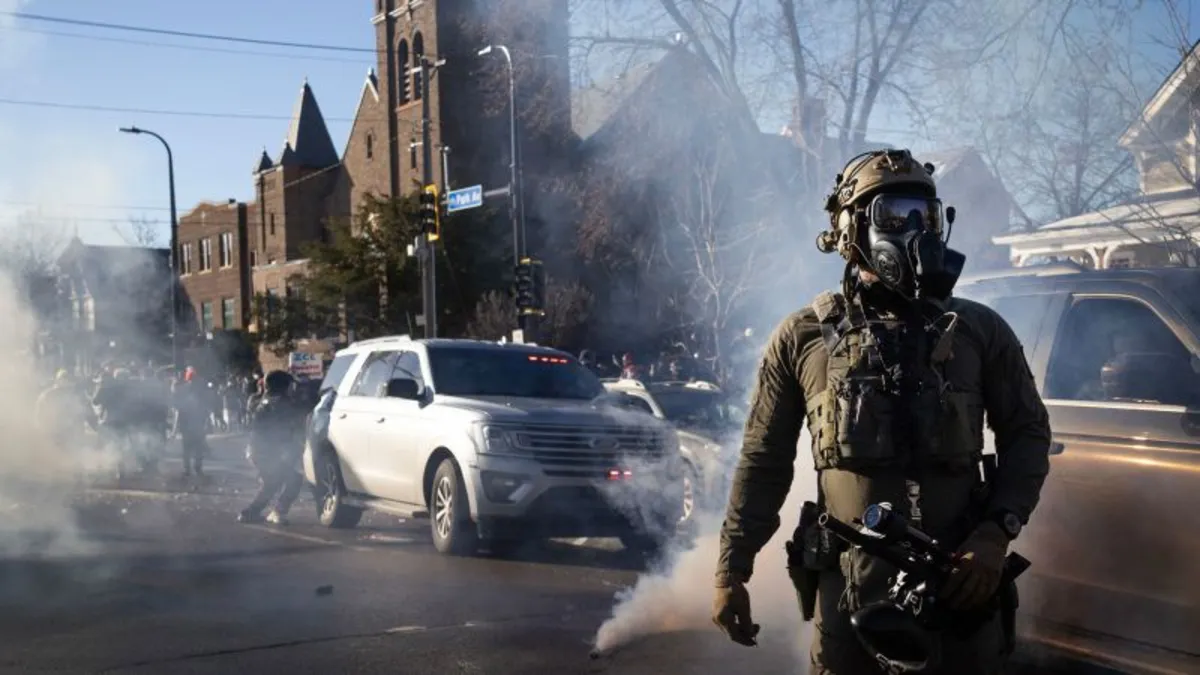
In recent months, cities like Chicago, Minneapolis, and St. Paul have witnessed a significant increase in federal immigration enforcement activities. Agents have arrested thousands of individuals, including some U.S. citizens, in various locations such as neighborhoods, shopping centers, schools, and even during protests. This surge in enforcement is attributed to the Trump administration's aggressive stance on immigration, particularly targeting Democratic-led cities. Tensions have escalated between the federal government and local officials, who have consistently called for an end to these operations.
In response to the heightened enforcement, both Illinois and Minnesota, along with their city counterparts, have initiated legal action against the administration. On Monday, they filed lawsuits in federal courts, arguing that the immigration enforcement practices are unlawful and unconstitutional. Minnesota's lawsuit is scheduled for a status conference before U.S. District Judge Katherine M. Menendez on Wednesday morning, while Illinois has yet to schedule a hearing. However, legal experts suggest that the chances of success for these lawsuits are slim.
According to Elie Honig, a former federal and state prosecutor and CNN senior legal analyst, the core request from both states is for federal judges to prohibit Immigration and Customs Enforcement (ICE) from enforcing immigration laws within their jurisdictions. While there are variations in how each state frames its request, the underlying goal remains the same. Illinois seeks to block all ICE activities, while Minnesota is focused on halting the recent surge of officers in its areas.
Honig notes the absence of legal precedent for such requests, stating that there is no existing case where a judge has prohibited a federal law enforcement agency from enforcing federal law in a specific state. The dramatic language used by officials, including Minnesota Attorney General Keith Ellison, does not alter the legal framework that governs such actions. The state’s characterization of the situation as an "invasion" does not provide grounds for creating new legal precedents.
Honig assesses the strength of the states' arguments as fundamentally weak. He believes that the legal basis for blocking ICE's enforcement activities is nearly non-existent. The likelihood of judicial support for such sweeping requests is minimal, and any favorable ruling would likely face rapid reversal.
The outcome of these legal challenges largely depends on the presiding judges. Honig suggests that, at best, the states may receive sympathetic judges willing to scrutinize ICE's practices. This could lead to hearings involving ICE officials and a potential judicial recommendation for improved practices, but outright prohibition of ICE enforcement activities is highly unlikely.
Key legal principles at play include the Supremacy Clause, which establishes that state and local authorities cannot impede federal enforcement of laws, and Article Two of the Constitution, which grants the federal executive branch the authority to enforce federal laws. These principles present a significant hurdle for the states' lawsuits.
While the states' chances of success in court appear minimal, Honig emphasizes that alternative avenues exist for addressing any perceived abuses by ICE. Individuals whose rights are violated can seek redress through targeted legal actions instead of broad lawsuits aimed at halting federal enforcement.
Honig draws a distinction between the current immigration enforcement lawsuits and a previous case where Illinois and Chicago successfully sued the Trump administration over the deployment of the Illinois National Guard. The legal circumstances of that case were based on specific federal statutes, unlike the current immigration enforcement situation, which lacks a similar legal foundation.
Following the filing of lawsuits, the judges involved may choose to either dismiss the cases or allow for further proceedings. It is anticipated that the judges will want to hear from both parties, potentially leading to fact-finding hearings to investigate ICE's operations. However, any ruling that restricts ICE's activities is likely to face swift legal challenges.
The timeline for judicial responses to these lawsuits remains uncertain. Legal experts predict that the judges will act promptly but the specific duration for the proceedings will depend on various factors, including the complexity of the cases and the willingness of the judges to engage in further inquiry.