

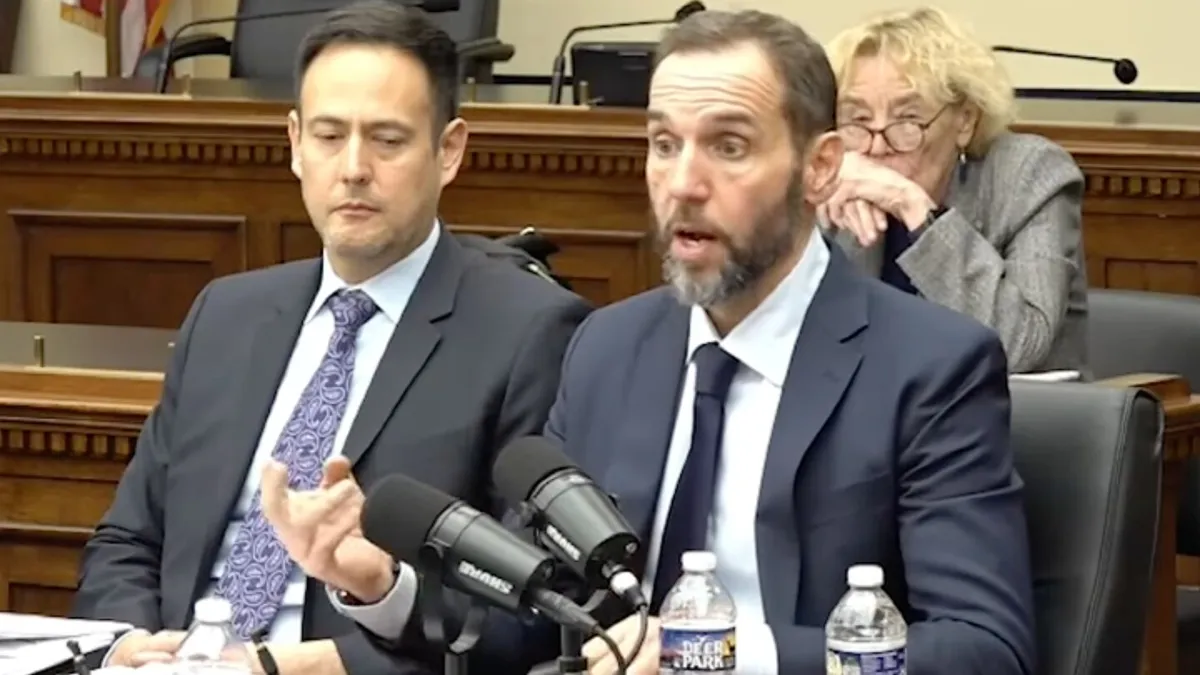
In a recent closed-door session with lawmakers, former special counsel Jack Smith emphasized that the chaotic events of the January 6, 2021 riot at the U.S. Capitol “does not happen” without the involvement of Donald Trump. Smith characterized the former Republican president as the “most culpable and most responsible person” in the alleged criminal conspiracy aimed at overturning the results of the 2020 presidential election.
The Republican-led House Judiciary Committee released a transcript and video of Smith's testimony, which highlighted his steadfast defense of the investigations targeting Trump. During the deposition, Smith vehemently rejected claims from Republican lawmakers suggesting that his inquiries were politically motivated. “The evidence here made clear that President Trump was by a large measure the most culpable and most responsible person in this conspiracy,” Smith stated, adding that the violent attack at the Capitol would not have occurred without Trump's influence.
Addressing questions about the motivations behind the investigations, Smith firmly disagreed with any characterization that they were intended to undermine Trump’s potential 2024 presidential campaign. He asserted, “I entirely disagree with any characterization that our work was in any way meant to hamper him in the presidential election.” This testimony provides critical insights into the decision-making process behind two of the most significant Justice Department investigations in recent history.
Trump faces indictments on charges related to his attempts to overturn the 2020 election results and for allegedly retaining classified documents at his Mar-a-Lago estate in Florida. Both cases were subsequently abandoned after Trump announced his candidacy for the 2024 election, with Smith citing Justice Department policy against indicting a sitting president. However, he expressed confidence in the strength of the evidence against Trump, stating that it was robust enough to support a conviction.
Smith highlighted the importance of testimony from Trump allies and supporters who cooperated with the investigation, describing it as a cornerstone of the January 6 case. “We had an elector in Pennsylvania who is a former congressman, who was going to be an elector for President Trump, who said that what they were trying to do was an attempt to overthrow the government and illegal,” Smith detailed. Such accounts from Republicans who prioritized their loyalty to the country over party lines provided what he termed the “most powerful” evidence against Trump.
Examining Trump’s direct influence on the Capitol riot, Smith asserted that Trump “caused it and that he exploited it,” indicating that the insurrection was foreseeable to him. He elaborated on how Trump misled his supporters with false claims of fraud and incited anger in the lead-up to January 6. “He made false statements to state legislatures, to his supporters in all sorts of contexts and was aware in the days leading up to Jan. 6th that his supporters were angry when he invited them and then he directed them to the Capitol,” Smith explained.
Smith also noted that during the violence, Trump failed to take immediate action to quell the unrest, issuing a tweet that endangered the life of his own vice president. “He had to be pushed repeatedly by his staff members to do anything to quell it,” Smith recalled.
Much of the deposition also revolved around the backlash from Republican lawmakers regarding Smith's team obtaining and analyzing phone records from GOP members who communicated with Trump on January 6. Smith defended this lawful approach, indicating that the responsibility should lie with Trump, not his prosecutorial team. “Well, I think who should be accountable for this is Donald Trump,” he asserted.
Smith highlighted the significance of communications between Trump and Republican supporters in Congress, referencing an interview with former White House Chief of Staff Mark Meadows. Meadows noted that Representative Jim Jordan, a prominent Republican and current chairman of the House Judiciary Committee, was in touch with the White House during the riot, emphasizing the gravity of the situation.
Additionally, Smith addressed the explosive claims made by former White House aide Cassidy Hutchinson, which alleged that Trump attempted to seize control of the presidential SUV when the Secret Service refused to take him to the Capitol. Smith confirmed that investigators had interviewed the officer involved, but the officer’s account did not align with Hutchinson's assertions.
As these investigations continue to unfold, Smith's testimony sheds light on the complexities of the cases against Trump, emphasizing the critical role of evidence and testimonies in understanding the events of January 6, 2021.