

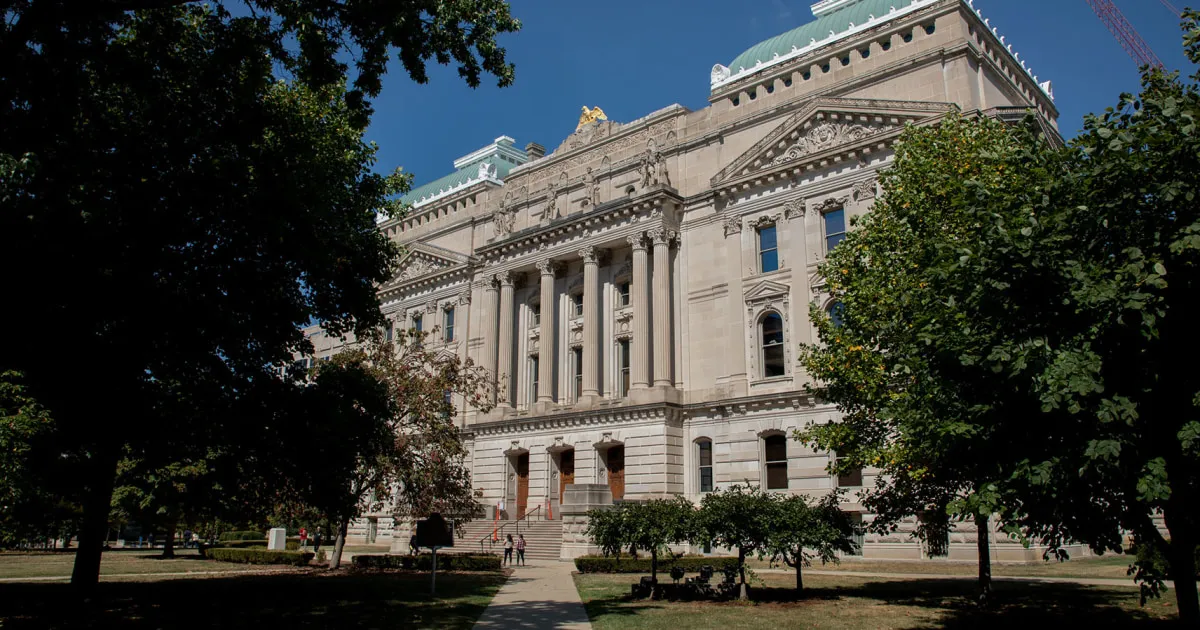
The Indiana House took a significant step on Friday by approving a new congressional map that is strategically designed to secure two additional seats for the Republican Party. This legislative move sets the stage for a contentious clash regarding the redistricting efforts that have been heavily influenced by former President Donald Trump within the state Senate. The bill successfully passed the state House with a vote of 57-41, showcasing the partisan divide on this crucial issue.
Despite the bill's passage in the House, Republican leaders in the Indiana Senate have expressed skepticism regarding the level of support for the proposed map. The new congressional map aims to grant the GOP control over all nine congressional districts in Indiana. This redistricting effort has faced mounting pressure from the White House, as Trump seeks to bolster his party's slim majority in the U.S. House ahead of the upcoming midterm elections.
The redistricting debate has stirred significant controversy, leading to threats of primary challenges and instances of violent harassment directed at Republican lawmakers who oppose the new map. Shockingly, at least 11 elected Republicans in Indiana have been targeted by swatting attempts—situations where false police reports are filed to elicit a heavy law enforcement response. Such hostile actions underline the intense political climate surrounding this issue.
Currently, Reps. André Carson and Frank Mrvan are the only Democrats representing Indiana in Congress. The proposed Republican-drawn map threatens to disrupt their districts significantly. One of the most contentious aspects of the map includes the division of Indianapolis into four separate districts, effectively diluting the Democratic vote that the city typically provides. Additionally, the Democratic-leaning northwestern region of Indiana would be split into two districts, further challenging Democratic representation.
Rep. Ben Smaltz, the Republican who introduced the redistricting legislation, acknowledged that the map was crafted with political advantages in mind. He revealed that the map was designed by the National Republican Redistricting Trust, a group known for similar efforts in Texas. The bill's passage came after over three hours of debate, during which Democrats voiced their vehement opposition.
Democratic state House Minority Leader Phil GiaQuinta condemned the map as a direct affront to the democratic process, emphasizing that it disregards the desires of the citizens of Indiana. He characterized the effort as a blatant indication that Republican leaders do not prioritize the needs of Hoosiers. Furthermore, Democratic state Rep. Matt Pierce criticized the rushed and unconventional nature of the redistricting process, highlighting the challenges faced by Congress members who would need to represent both urban communities in Indianapolis and rural populations along the river.
While state House Speaker Todd Huston briefly supported the map, Smaltz was the primary Republican voice defending it. He noted that while the census typically guides redistricting, there are no legal barriers preventing legislatures from revisiting maps when necessary circumstances arise. Indiana is not alone in this aggressive mid-decade redistricting push; similar efforts are occurring in states like Texas, California, Missouri, North Carolina, and Ohio, all of which aim to reshape congressional representation favorably for their respective parties.
This ongoing battle over congressional maps illustrates the increasing politicization of redistricting and its potential impact on upcoming elections. As Indiana navigates this contentious issue, the implications of the new map could resonate well beyond state lines, influencing the broader national political landscape.