

House Republicans are moving ahead with planned health care votes next week; however, an extension of the enhanced Affordable Care Act (ACA) subsidies will not be included in their agenda. This decision is significant as it raises the likelihood that these crucial subsidies could expire by the end of the year, which could impact millions of Americans relying on financial assistance for health insurance.
The strategy adopted by House Republicans aims to provide alternatives that could help mitigate criticism from Democrats regarding health care affordability. According to a source who attended the House Republicans' conference meeting on Wednesday, GOP leaders intend to introduce consensus bills that focus on lowering overall health care costs.
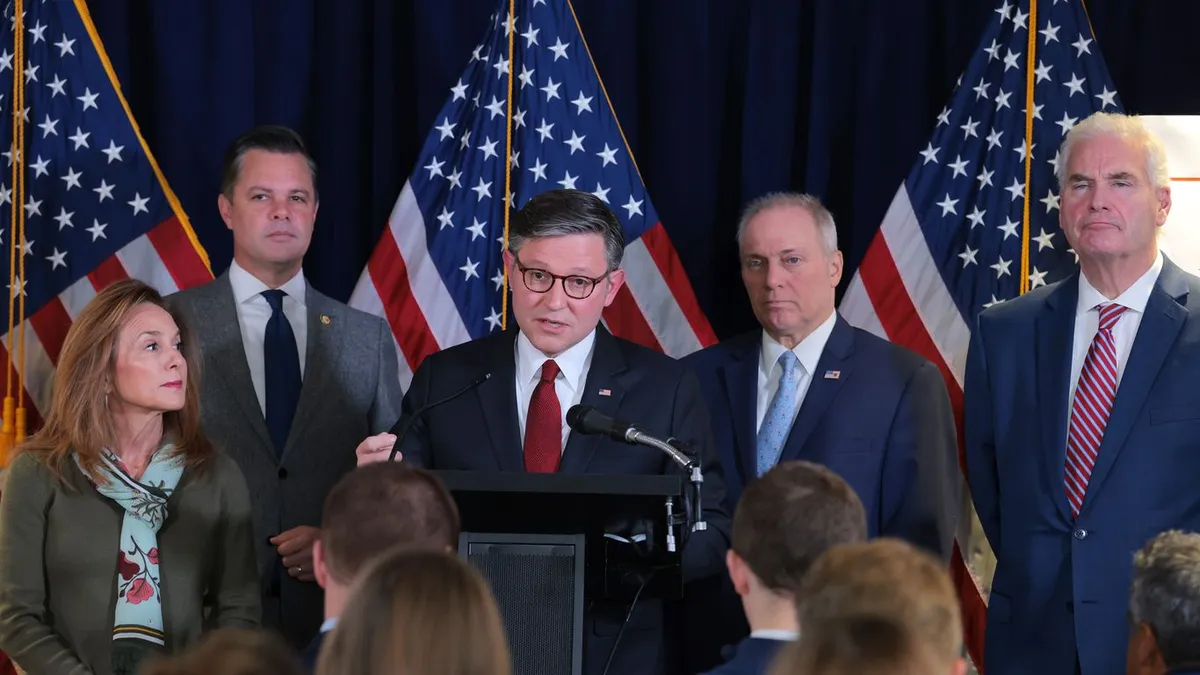
House Majority Leader Steve Scalise (R-La.) commented on the challenges of extending ACA subsidies, emphasizing the difficulty of passing such measures with a narrow majority. "When you've got a very narrow majority, if less than a handful of members are on the other side of an issue, it's not going to make it through our conference," Scalise stated, noting that Republican leaders are committed to continuing discussions into the next year to find common ground.
Speaker Mike Johnson (R-La.) previously assured that he would bring a health care proposal to the floor before the end of the year, underscoring the urgency of the situation.
During the Wednesday meeting, several initiatives were discussed, including the expansion of health savings accounts and the creation of association health plans. These plans would allow employers to collectively purchase health coverage, potentially lowering costs. Additionally, the GOP explored options to overhaul pharmacy benefit managers in an effort to reduce drug prices. Another key topic was the funding of ACA payments known as cost-sharing reductions (CSRs), which, while lowering overall premiums, would also cut the subsidies that some ACA enrollees currently receive.
Not all of the discussed ideas will be voted on next week, as GOP leaders are still determining which proposals will make it to the floor.
Despite the GOP's current stance, some moderate Republicans are advocating for an extension of the enhanced ACA subsidies, expressing concern over rising premium costs, especially in an election year. Representative Mike Lawler (R-N.Y.) stated, "I'm continuing to work towards addressing the immediate issue, which is the expiration of these Obamacare Covid-era subsidies, as well as the longer-term issue of addressing health care affordability."
Representative Brian Fitzpatrick (R-Pa.) took action by introducing a discharge petition on Wednesday aimed at extending the subsidies for two years. This petition has gained bipartisan support, with eight signers already and expectations for more to join.
Representative Jeff Van Drew (R-NJ) expressed concern about the lack of a comprehensive health care plan, stating, "If we don't have that, which I understand we don't, those concepts were wonderful, I like a lot of them, but we need a bridge to extend it for 18 months or two years." He indicated plans to support multiple health care-related discharge petitions.
Additionally, Representative Jenn Kiggans (R-Va.) has formalized her bipartisan ACA extension bill, further highlighting the ongoing discussions surrounding health care reforms.
Editor’s note: This story has been updated with additional reporting.