

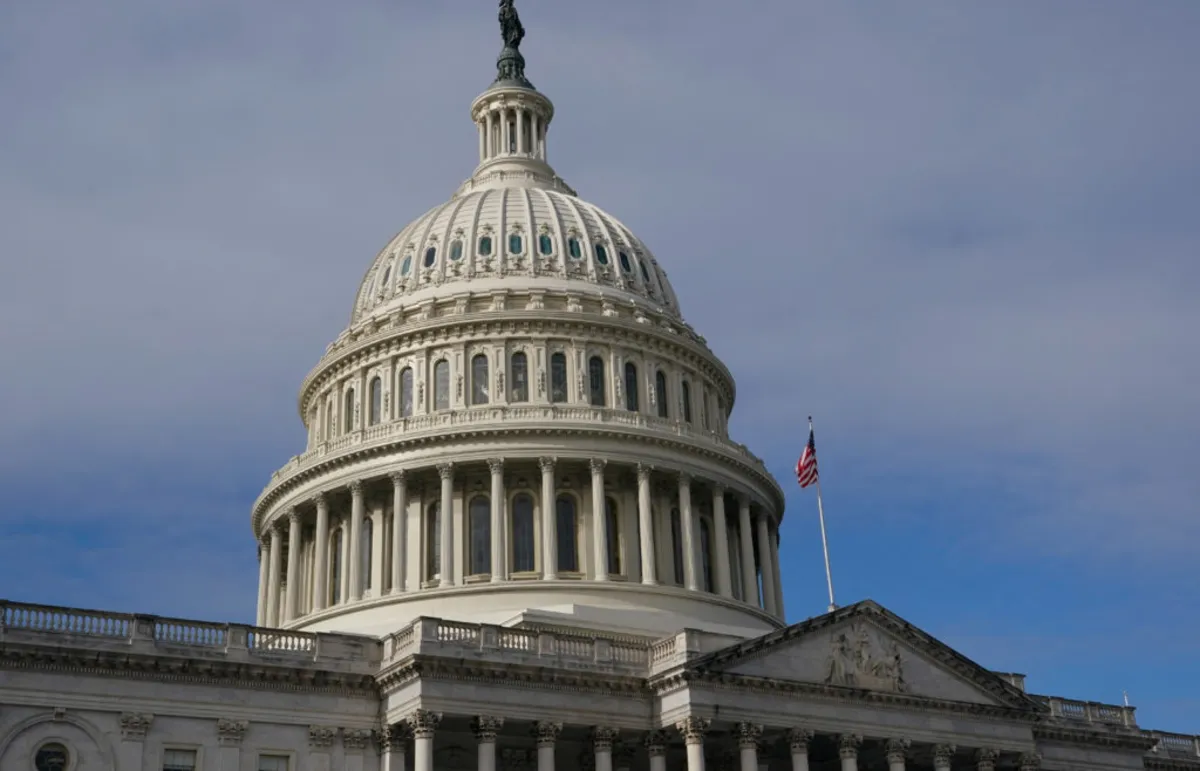
On Thursday, the House of Representatives successfully passed a bipartisan package of three spending bills aimed at funding essential parts of the federal government through September. This decisive action underscores lawmakers' urgency to prevent another government shutdown, which looms at the end of the month. So far, Congress has only managed to pass three out of the twelve annual spending bills necessary to finance federal agencies for the current fiscal year.
With a deadline set for January 30th, the failure to enact the remaining spending bills could lead to a shutdown, reminiscent of last year's record-setting 43-day standoff. The recent passage of this bill reflects a significant step forward, moving Congress halfway toward completing essential fiscal work for the year.
Leaders from both the Democratic and Republican parties have endorsed the latest measure, indicating strong support for its passage in the Senate. The White House has also expressed approval, referring to the bill as fiscally responsible. The spending package encompasses funding for various federal agencies, including the Interior Department, the Environmental Protection Agency (EPA), the U.S. Army Corps of Engineers, and the Departments of Commerce and Justice.
The bill achieved an impressive vote tally of 397-28, showcasing an unusual display of unity in a typically divisive arena—government spending. Both parties have claimed victories in this process, highlighting the collaborative nature of this legislative effort.
The total cost of the spending bills, estimated by Republicans to be around $175 billion, is notably below current levels, which proponents argue translates into savings for taxpayers. Democrats, however, countered that they successfully negotiated spending levels significantly higher than those proposed by the Trump administration. Moreover, they eliminated numerous policy riders that could have undermined gun safety regulations, expanded oil and gas leasing on federal lands, and targeted LGBTQ and racial equity initiatives.
Notably, the legislation includes legally binding spending requirements that limit the White House's authority to withhold or delay funding for programs favored by Trump. This move comes in the wake of numerous lawsuits during Trump's first year in office, where states, cities, and non-profits accused his administration of overreaching its power.
According to Rep. Rosa DeLauro, the ranking Democrat on the House Appropriations Committee, this legislation robustly rejects the severe cuts to public services previously proposed by the Trump administration and congressional Republicans. Although the Senate must also pass the measure before it can be signed into law by President Trump, the bill enjoys bipartisan support in that chamber as well.
Rep. Tom Cole, the Republican chairman of the House Appropriations Committee, emphasized the importance of unity among parties. “Republicans are strongest when we stay focused, Democrats are more effective when they negotiate in good faith, and the country is better off when Republicans and Democrats work together,” he stated, urging his colleagues to support the bill.
In recent years, Congress has frequently combined all spending bills into one or two large measures, typically passed before lawmakers depart for the holiday recess. This approach simplifies the process, making it easier to include provisions that might otherwise struggle to secure approval on their own. Speaker Johnson has advocated for a return to the practice of addressing the twelve spending bills individually, though this goal remains challenging to achieve.
The current fiscal year began on October 1st, and Congress is still engaged in discussions over full-year funding for most federal agencies. Despite opposition from the administration, Democrats have successfully maintained or increased funding for various priorities, including a program aimed at enhancing energy efficiency in low-income homes, which received a $3 million increase instead of facing elimination as proposed by Trump. The EPA, frequently targeted by Trump, will receive $8.8 billion, more than double the amount he sought.
While some Republicans voiced concerns regarding certain earmarks within the bill, now referred to as community funding projects, adjustments were made to alleviate these worries. For instance, a nearly $1.5 million earmark secured by Rep. Ilhan Omar, D-Minn., aimed at funding a Somali-led organization for job training and addiction support services was removed from the bill. This decision comes amid ongoing investigations into allegations of fraud by daycare centers operated by Somali residents.
Rep. Omar has urged the public not to generalize the actions of a few individuals to an entire community, emphasizing the importance of fair representation and understanding. In conclusion, the passage of this bipartisan spending bill marks a pivotal moment in Congress's efforts to maintain funding for critical federal services while working collaboratively across party lines.