

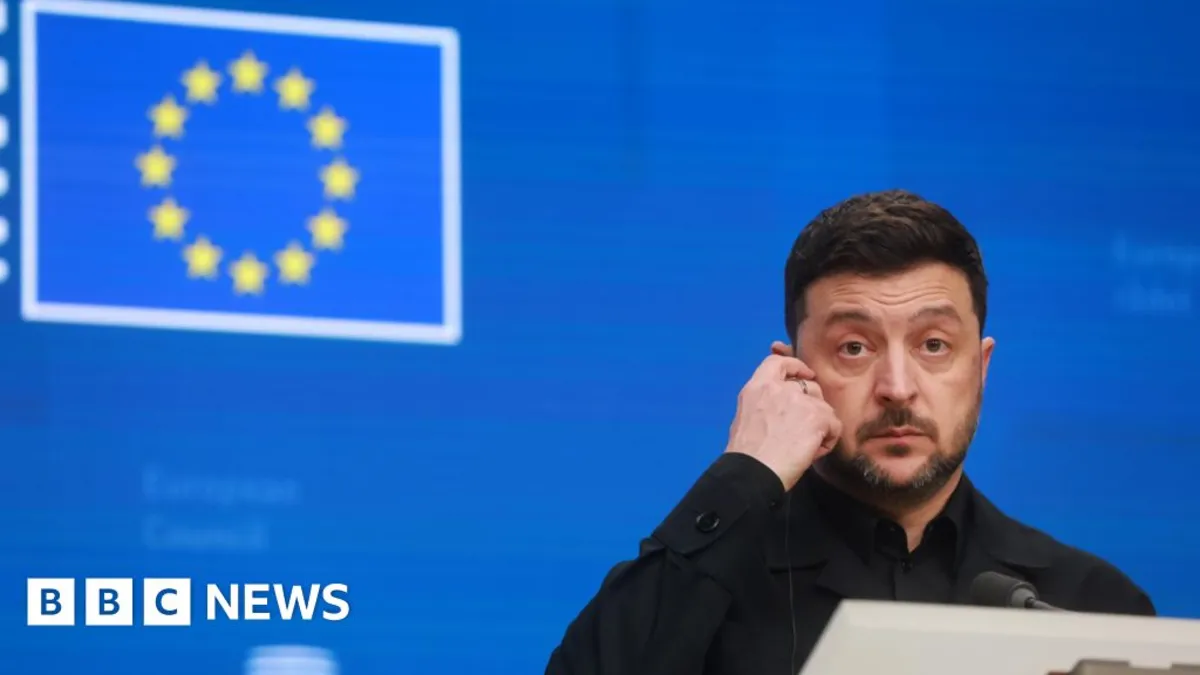
In a significant development, EU leaders reached a consensus in the early hours of Friday, following 17 hours of intense discussions, to collaboratively raise €90 billion (approximately £79 billion or $105 billion) in zero-interest loans aimed at providing crucial financial support to Ukraine for the next two years. This financial backing is not just a luxury for Kyiv; it is a necessity. With the previous administration in the United States, under Donald Trump, stepping back from offering new military aid, Ukraine has shifted its focus towards Europe for assistance.
Ukrainian President Volodymyr Zelensky has made it clear to EU leaders that without this essential funding, Ukraine would struggle to pay its soldiers or procure the necessary weapons to defend against Russian aggression. The newly agreed-upon EU loan will be secured by the bloc's common budget, but the path to unanimity was not without hurdles.
In a notable setback for Brussels, which aims to showcase a united European front regarding support for Ukraine, countries like Hungary, Slovakia, and the Czech Republic only supported the plan with the condition of individual exemptions. This condition highlights the ongoing divisions within Europe regarding attitudes toward Ukraine and Russia. Hungary and Slovakia's closer ties to the Kremlin stand in stark contrast to the perspectives of EU nations such as Poland and the Baltic States, which view Ukraine's fight for survival as critical to European security.
Poland's Prime Minister, Donald Tusk, emphasized the urgency of the situation upon arriving at Thursday's summit, asserting that EU leaders faced a stark choice: "pay money today, or pay in blood tomorrow." His statement underscored the gravity of the conflict not just for Ukraine, but for all of Europe.
This new EU joint-loan initiative replaces a contentious proposal to finance the €90 billion through frozen Russian state assets held within the EU, which amount to around €210 billion in total, primarily located in Belgium. While Kyiv viewed this approach as morally justified, given the extensive destruction caused by Russia, several EU nations expressed concerns about potential legal repercussions from Russia and the implications for the eurozone's reputation as a secure hub for global assets.
Brussels has indicated that it may explore the possibility of utilizing the frozen Russian assets to repay the EU loan to Ukraine in the future, contingent on a peace agreement. For now, however, it is estimated that Ukraine will require an additional €45 billion to cover its expenses for 2026 and 2027. The EU is optimistic that non-member allies such as the UK, Japan, and Canada may contribute to this financial need.
Ensuring that Ukraine does not face bankruptcy at this critical juncture also paves the way for the country to access loans from institutions such as the International Monetary Fund (IMF), reinforcing the importance of this loan agreement in sustaining Ukraine's economy amid ongoing conflict.