

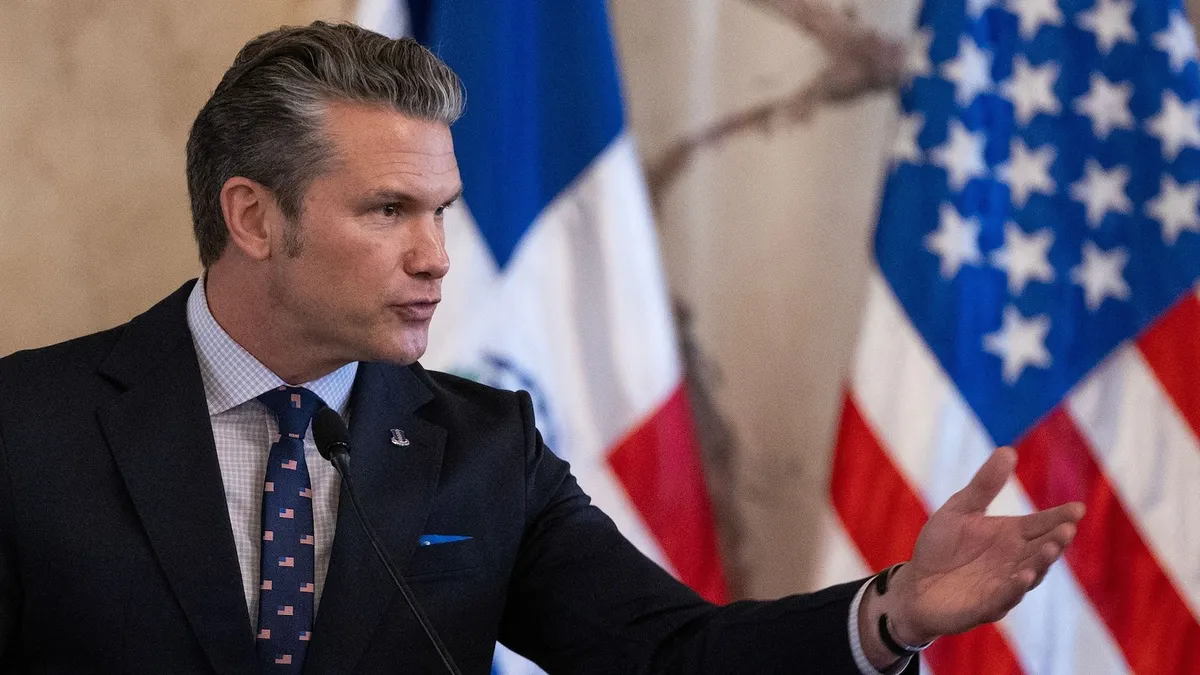
The actions of Defense Secretary Pete Hegseth and a senior military commander are under intense scrutiny following a military strike on September 2 that resulted in the deaths of survivors from an initial attack on a suspected drug boat. This incident raises significant questions about adherence to the laws of war, which mandate rescue efforts for survivors on the battlefield. The White House has confirmed that a second strike was ordered against a boat already targeted by U.S. forces in the Caribbean Sea, leading to the tragic deaths of individuals who had survived the first assault. Democratic lawmakers have suggested that this could indicate a potential war crime.
According to established laws of war, both sides in a conflict are required to provide care for wounded and shipwrecked personnel. In a statement to Fox News the day following the attack, Secretary Hegseth defended the operation, asserting its legality. He appears to be relying on the same legal framework that the U.S. government used during the war on terror, which justified strikes against individuals deemed threats to U.S. forces. Senator Roger Wicker, the Republican chairman of the Senate Armed Services Committee, indicated that lawmakers would conduct oversight to uncover the truth behind the operations, calling for access to video evidence and the specific orders given during the strikes.
Several critical questions have emerged regarding the orders issued by Hegseth. One of the main inquiries is what the initial orders entailed and the intelligence that informed them. Reports from The Washington Post suggest that Hegseth directed military personnel to ensure that none of the 11 individuals aboard the targeted boat were allowed to survive. Following the initial strike, which left two survivors clinging to wreckage, Adm. Mitch Bradley, head of the Joint Special Operations Command, reportedly made the decision to launch a second strike to adhere to Hegseth’s orders. While Hegseth has labeled these reports as fabrications, his spokesperson has labeled the narrative as “fake news.” The Pentagon has refrained from providing clarity on the specifics of Hegseth’s initial orders. Furthermore, White House Press Secretary Karoline Leavitt confirmed that a second strike occurred but did not address the matter of survivors.
Adm. Mitch Bradley, a highly experienced former Navy SEAL, is noted for his respected leadership within the military. At the time of the September 2 strike, he was overseeing special operations missions under U.S. Central Command. His nomination to lead U.S. Special Operations Command received overwhelming bipartisan support in the Senate. Former Navy SEAL and ABC News contributor Eric Oehlerich remarked that he has never witnessed Bradley overstep legal boundaries. Oehlerich noted that if Bradley authorized further strikes on September 2, the decision would likely have been based on Hegseth’s initial order and intelligence assessments regarding the threat posed by the alleged smugglers. He emphasized that military commanders always have legal advisors present during operations.
Hegseth’s rationale for killing drug smugglers mirrors justifications used in the post-9/11 era when Congress authorized military force against al-Qaida-linked targets. This authority allowed military commanders to strike individuals transporting explosive devices deemed an immediate threat to U.S. forces. Earlier this year, former President Donald Trump equated drug smugglers with terrorists, classifying certain drug cartels as foreign terrorist organizations. However, legal experts have contested the validity of comparing drug smugglers to groups like al-Qaida or ISIS, pointing out that Congress has not provided authorization for such military actions against these individuals.
There remains a critical need to identify who was aboard the boats targeted during the strikes and the actual threat they posed. Rep. Jim Himes, the leading Democrat on the House Intelligence Committee, expressed anticipation for clarity regarding the U.S. intelligence involvement in the strikes and their strategic impact. As investigations unfold, Senator Thom Tillis has stated that if the allegations against military leadership are substantiated, accountability must follow, emphasizing the need for transparency in military operations.