

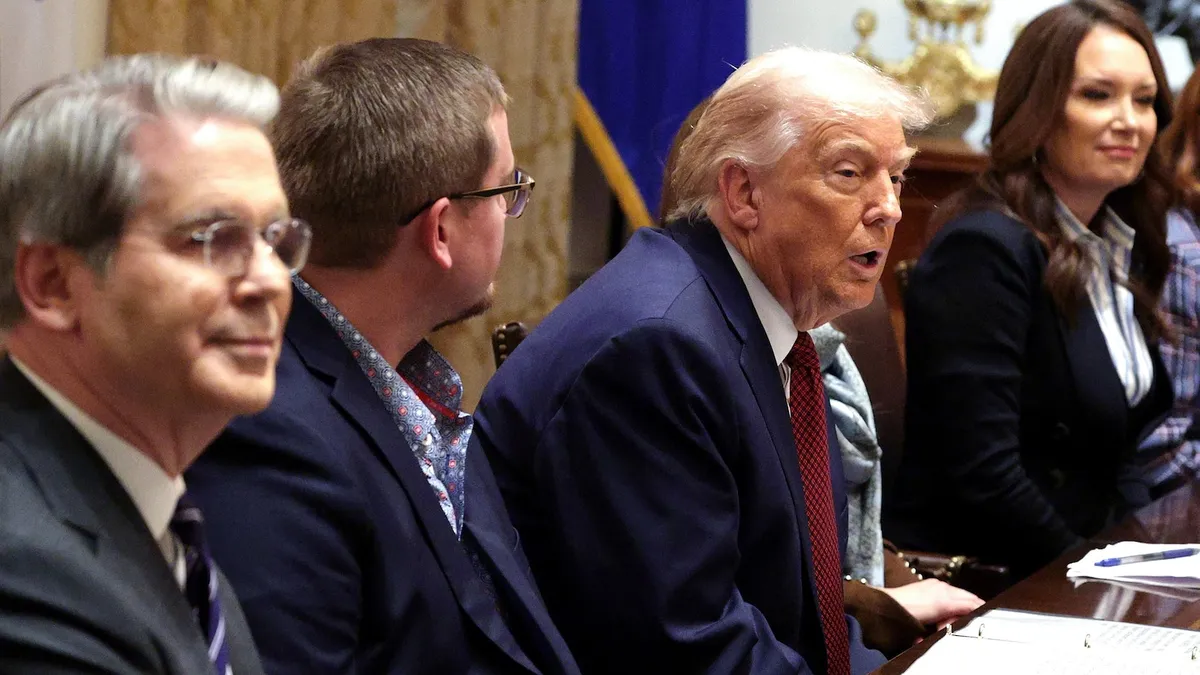
On Monday, President Donald Trump unveiled a significant funding initiative aimed at supporting American farmers, amounting to a total of $12 billion. This funding is set to be sourced from the revenue generated through tariffs. "I'm delighted to announce this afternoon that the United States will be taking a small portion of the hundreds of billions of dollars we receive in tariffs," Trump stated. He emphasized the administration's commitment to providing economic assistance to farmers, saying, "And we love our farmers."
The newly announced aid package includes $11 billion allocated for one-time payments to crop farmers through a newly established Department of Agriculture bridge payment program. The remaining funds will be distributed to support other crops that are not included in this program. This financial relief is designed to offer much-needed certainty to farmers as they work to bring this year's harvest to market and plan for future crops. "It'll help them continue their efforts to lower food prices for American families," Trump added.
This long-anticipated aid package comes in response to the detrimental effects of the U.S.-China trade war, which has significantly impacted soybean farmers. Throughout the fall, during what was expected to be a bumper harvest season, China effectively blocked all purchases of soybeans from the United States. In fact, China was the largest buyer of U.S. soybeans in 2024, contributing approximately $12.64 billion in sales, according to data from the USDA.
During a high-stakes meeting between Trump and Chinese President Xi Jinping in late October, the two nations announced a framework for a trade agreement that included a deal on soybeans. As a result, China agreed to purchase 12 million metric tons of soybeans in the last two months of this year and an additional 25 million metric tons in the years 2026, 2027, and 2028, bringing purchases back to pre-trade war levels. Since the end of October, China has reportedly bought around 2.2 million metric tons of U.S. soybeans, according to USDA data.
The announcement of this new aid package follows a controversial $20 billion bailout of Argentina, a move that drew criticism from many American farmers as well as lawmakers from both political parties. This fall, as China halted its purchases of soybeans from U.S. farmers, it turned to Argentina for its soybean supply. Many American farmers expressed feelings of neglect, stating that while the U.S. was providing financial assistance to Argentina, they felt left behind. Republican Senator Chuck Grassley of Iowa voiced this sentiment in a September social media post, highlighting the frustration among farmers with the lack of U.S. soybean sales to China.
In his first term, Trump also implemented measures to aid American farmers, approving two separate aid packages in 2018 and 2019, which totaled $28 billion to support those affected by his economic policies. This latest initiative aims to continue that support and stabilize the agricultural sector amidst ongoing trade challenges.