

In a shocking turn of events, newly released documents have revealed that the gunmen who allegedly orchestrated a deadly attack on a Jewish festival at Bondi Beach last week initiated their assault by throwing four undetonated explosives, including a distinctive tennis ball bomb. This attack occurred during a Hanukkah celebration on December 14, resulting in numerous casualties and significant public outrage.
Naveed Akram, a 24-year-old man, has been charged with multiple offences, including 15 counts of murder in connection with this tragic incident. During the attack, Akram was shot by police and subsequently hospitalized. He was released from the hospital on Monday and has now been transferred to a correctional facility. His father, Sajid Akram, who is also implicated in the attack, was shot dead during the incident.
According to police documents, the Akrams meticulously planned this terrorist attack for several months. Prior to the attack, the duo recorded a video manifesto in October, where they were seen sitting in front of the Islamic State group flag. This video allegedly details their motivations for the Bondi attack and includes condemnations of 'Zionists'. Furthermore, Naveed is said to recite a passage from the Quran in Arabic within the same video.
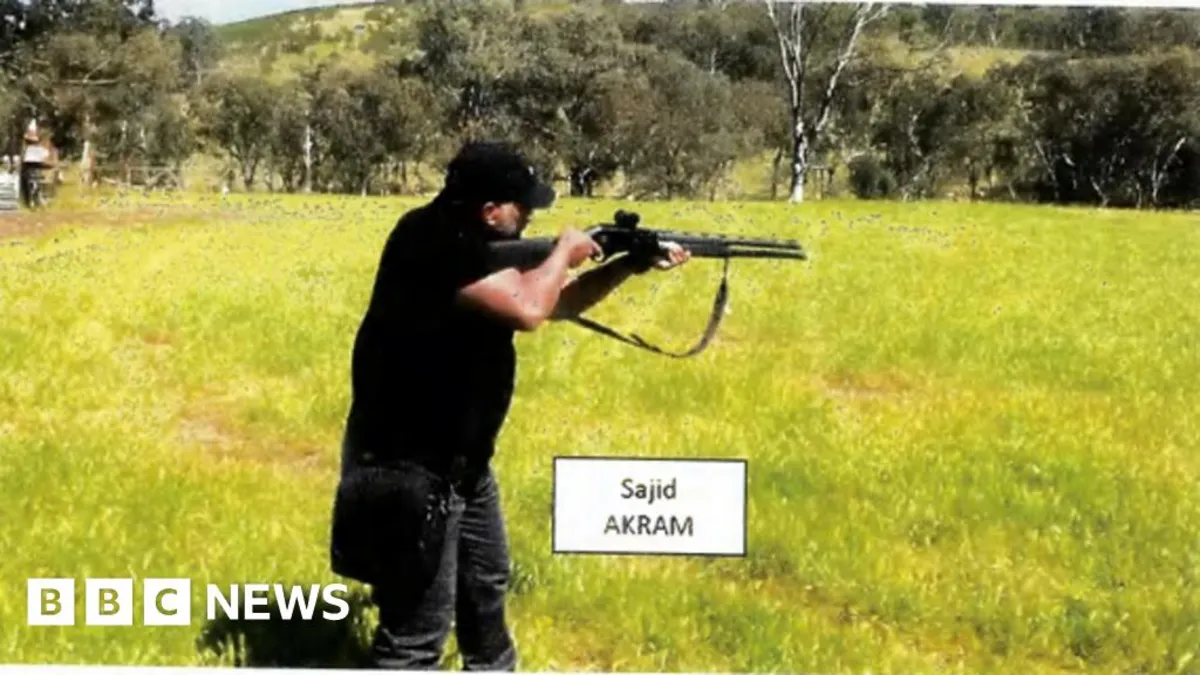
Additional videos retrieved from Naveed's phone indicate that the pair were driven by a violent extremist ideology linked to the Islamic State group. One video reportedly shows them conducting firearms training in rural New South Wales in October, where they are seen firing shotguns and adopting tactical maneuvers. This evidence underscores the alarming extent of their preparations.
In the days leading up to the attack, CCTV footage captured the Akrams conducting reconnaissance at Bondi Beach. According to police allegations, the footage shows them driving to the area and later exiting their vehicle to walk along a footbridge—an area where they would return two days later to execute their attack on unsuspecting festival attendees.
Before the attack, police assert that the Akrams left their rented accommodation in the Sydney suburb of Campsie carrying long and bulky items wrapped in blankets. These items were later identified as three firearms, homemade improvised explosive devices (IEDs), including the tennis ball bomb, and two Islamic State flags. Following their arrival at Bondi Beach, they parked their vehicle and displayed the flags in their car windows.
As they approached the footbridge, the Akrams allegedly threw three homemade pipe bombs and the tennis ball bomb. While these devices were assessed as viable, they did not detonate during the attack. Police later discovered a fifth explosive device in their vehicle, further emphasizing the premeditated nature of this heinous act.
Despite suffering critical injuries from police gunfire, Naveed Akram did not appear in court on Monday. A temporary suppression order that had initially protected the identities of the attack's survivors was lifted after a media application to the New South Wales Local Court, though most survivor names remain redacted for privacy.
The Bondi Beach attack has sent shockwaves through the community, highlighting the ongoing threat posed by domestic terrorism and extremist ideologies. As the investigation continues, authorities are working diligently to ensure justice is served and to enhance security measures for public events.