

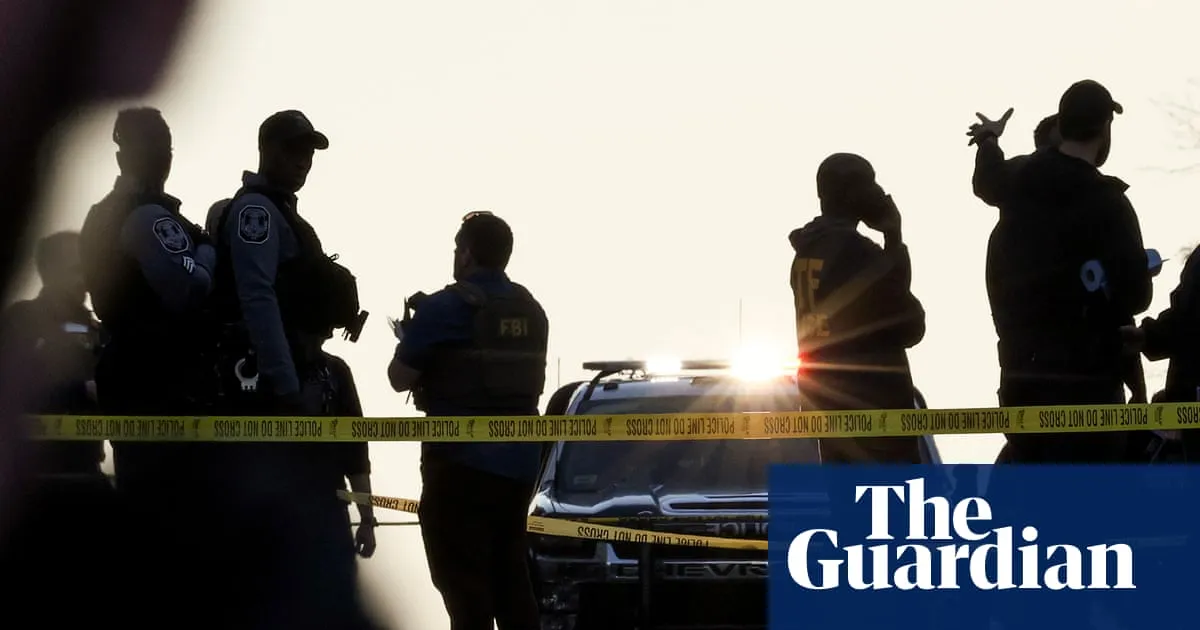
In the wake of a tragic shooting incident in Washington, D.C. on the eve of Thanksgiving, the suspect, Rahmanullah Lakanwal, has been identified as a man grappling with severe mental health issues. This incident resulted in the death of Sarah Beckstrom, 20, and left Andrew Wolfe, 24, in critical condition. Lakanwal, 29, has been charged with first-degree murder following the shocking events, during which he was also shot by another National Guard member.
Emails obtained by the Associated Press reveal that Lakanwal’s mental health has been deteriorating for years. Struggling to adapt since his arrival in the United States, he often spent "weeks on end" in isolation. This isolation was compounded by his inability to maintain steady employment and his tendency to engage in erratic behaviors, including taking spontaneous, lengthy cross-country drives.
Community advocates expressed growing concerns about Lakanwal's well-being. One advocate even reached out to a refugee organization, fearing that he was on the brink of a suicidal crisis. However, there were no indications that Lakanwal would resort to violence against others prior to the tragic shooting incident.
Before his resettlement, Lakanwal served in a CIA-backed Afghan army unit known as a Zero Unit. In 2021, he entered the United States through Operation Allies Welcome, a program designed to evacuate and resettle Afghan allies following the chaotic withdrawal of U.S. troops. He resettled in Bellingham, Washington, with his wife and their five young sons, all under the age of 12.
Despite receiving support, Lakanwal struggled to assimilate into American society. Community members noted that he often oscillated between extreme isolation and reckless travel, spending considerable time in his “darkened room” without speaking to anyone, including his family.
In early 2024, Lakanwal faced eviction after falling behind on rent payments. A case worker, who had been assisting Afghan families, noted in an email that Lakanwal had “not been functional as a person, father, and provider since March of last year.” This email highlighted the severity of his struggles, indicating a significant decline in his mental health.
Despite these challenges, Lakanwal showed glimpses of improvement. He would occasionally re-engage with local social services, attempting to fulfill the obligations of his resettlement. However, these attempts often turned into "manic" episodes, during which he would embark on spontaneous road trips across the country, including journeys to Chicago and Arizona.
In response to the alarming situation, the U.S. Committee for Refugees and Immigrants (USCRI) visited Bellingham in March 2024 to reach out to Lakanwal and his family. This initiative aimed to provide additional support and resources to help them navigate their challenges.
Jeanine Pirro, the U.S. attorney in the District of Columbia, emphasized the profound sense of defeat that Lakanwal felt after moving to the United States. "Rahmanullah was a man who was extremely proud and capable in the world he came from, who felt defeated in the world he came to," noted the case worker, reflecting the struggles many refugees face when adapting to a new life.
The tragic shooting incident involving Rahmanullah Lakanwal serves as a stark reminder of the complex interplay between mental health, cultural adjustment, and the challenges faced by refugees in the United States. As investigations continue, it is crucial to address the mental health needs of individuals like Lakanwal to prevent such tragedies in the future.