

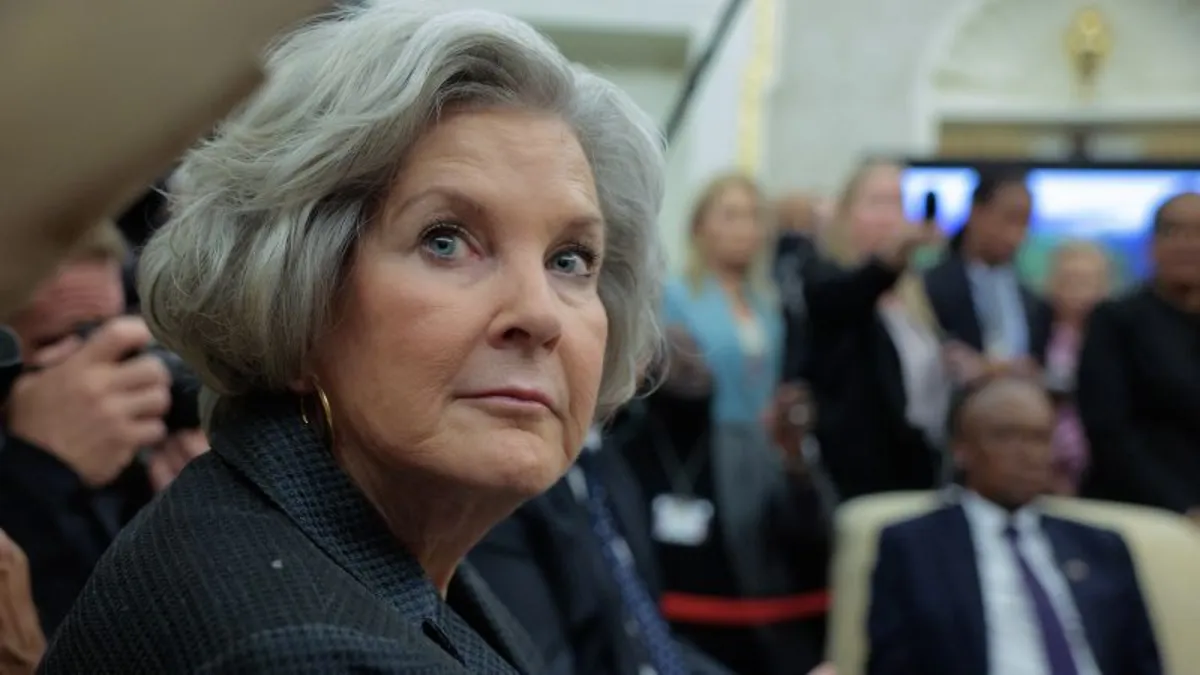
In a series of candid interviews published by Vanity Fair on Tuesday, the White House Chief of Staff, Susie Wiles, provided a strikingly honest assessment of President Donald Trump, his agenda for a potential second term, and some of his closest advisors. Wiles' reflections, drawn from over ten interviews with author Chris Whipple, present a multifaceted view of the administration, characterized by both admiration and criticism.
Wiles did not hold back in her evaluation of Trump, describing him as possessing “an alcoholic’s personality,” despite his reputation as a teetotaler. She acknowledged that his actions are often motivated by a desire for revenge, suggesting that many of Trump’s decisions during his second term could be interpreted through the lens of retribution. This candor highlights the complexities of working within the Trump administration.
Wiles openly discussed several contentious issues where she felt her advice was overlooked. One notable point was her suggestion that Trump was pursuing regime change in Venezuela through military actions, which contradicted the White House’s official explanations for these strikes. She expressed concern that Trump’s strategies often disregarded the input of his advisors, particularly regarding sensitive topics like deportations and pardons.
Following the publication of these interviews, Wiles claimed that her remarks had been misrepresented, describing the article as a “disingenuously framed hit piece.” In a statement on X, she asserted that significant context had been omitted, painting an unfairly negative narrative about both the president and his administration. White House Press Secretary Karoline Leavitt defended Wiles, highlighting her loyalty and effectiveness in her role.
Throughout the interviews, Wiles also offered unflattering assessments of Trump’s close allies. She characterized Vice President JD Vance as a “conspiracy theorist” and expressed skepticism about his political motivations. Vance later acknowledged his history with conspiracy theories but defended Wiles as a dedicated chief of staff.
Wiles did not shy away from commenting on tech billionaire Elon Musk, calling him “an odd, odd duck” and noting his use of ketamine, which left her “aghast” at his decision to dismantle the U.S. Agency for International Development. Her critical perspective extended to Attorney General Pam Bondi, whom she believed mishandled sensitive information related to the Epstein case.
Wiles articulated her concerns about various policy decisions within the administration. She stressed the need for a more thoughtful approach to deportations and expressed her belief that the administration should focus on economic issues rather than international distractions like Saudi Arabia. Additionally, she voiced her opposition to pardoning individuals involved in the January 6th insurrection, advising Trump to reconsider his approach.
The fallout from Wiles' interviews sparked intense discussion among Trump’s aides and allies. Many were taken aback by the frankness of her remarks, leading to speculation about her motivations. Questions arose regarding whether Wiles was seeking revenge, preparing to exit her role, or if there had been a misunderstanding about the nature of her comments.
Despite the controversy, one thing is clear: Wiles is recognized as one of the most strategic and calculated figures in politics. Her insights, albeit controversial, provide a rare glimpse into the inner workings of the Trump administration and its complex dynamics.