

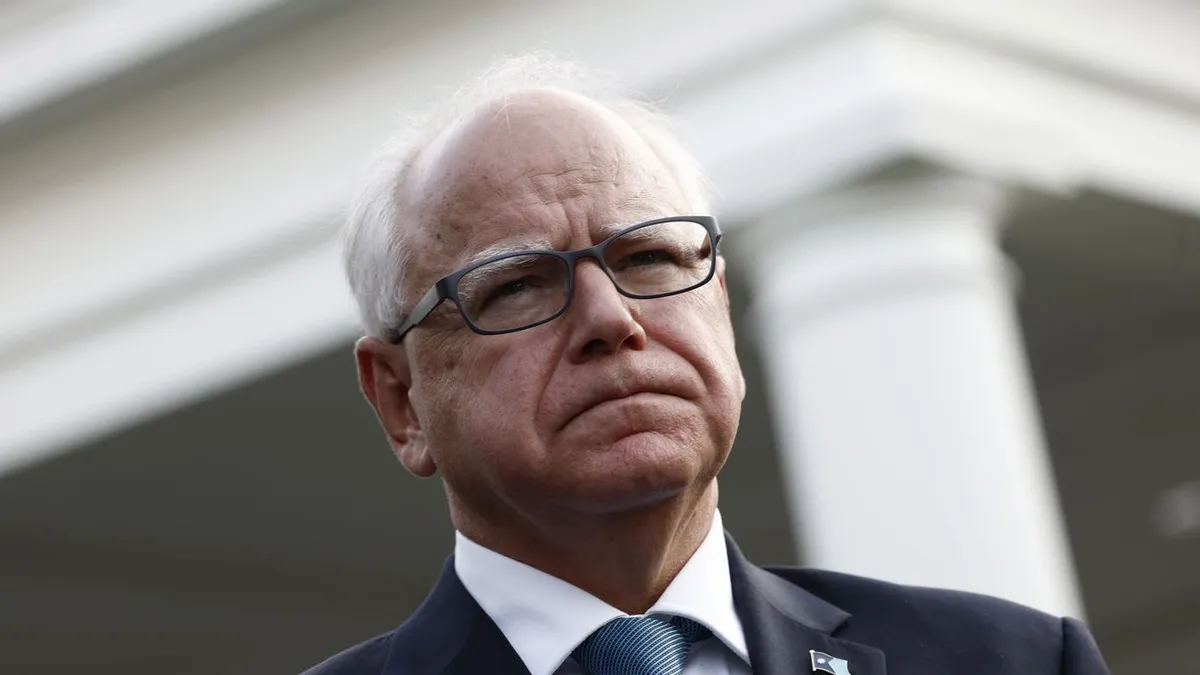
On Monday, Minnesota Governor Tim Walz announced a surprising decision to end his bid for reelection. This significant reversal comes amid increasing pressure from fellow Democrats and marks a pivotal moment in Minnesota politics as the state gears up for the 2026 midterms.
Governor Walz's decision to withdraw from the race is crucial for several reasons. It highlights the growing divisions within the Democratic Party, particularly as the 2024 election approaches. Walz, who was initially seen as a strong contender for an unprecedented third consecutive term, faced mounting challenges, including sagging approval ratings and heightened scrutiny regarding fraud in state programs. These issues have created considerable anxiety among Democrats, prompting calls for Walz to reconsider his candidacy.
Back in September, Walz had declared his intention to run for a third term, positioning himself as the 2024 Democratic vice presidential nominee. However, the change in his plans indicates a major shift in the dynamics of the upcoming election. Since 2006, Democrats have dominated every statewide office in Minnesota, and political forecasts still favor their chances in next year’s elections. Nevertheless, Walz's perceived vulnerabilities have opened the door for a wide range of potential Republican challengers, including House Speaker Lisa Demuth and My Pillow CEO Mike Lindell.
As Governor Walz steps back, attention now turns to who will enter the race for the Democratic-Farmer-Labor (DFL) nomination. Potential candidates include prominent figures such as U.S. Senator Amy Klobuchar, Attorney General Keith Ellison, and Secretary of State Steve Simon. Their involvement could significantly reshape the political landscape as Minnesota approaches the 2026 elections.
In light of these developments, the focus also shifts to the ongoing GOP primary for governor. With Walz's exit, the Republican Party may find new opportunities to capitalize on the situation. Observers are keenly watching how this will impact the Republican candidates and their strategies moving forward.
In conclusion, Governor Tim Walz's decision to end his reelection campaign is a significant moment in Minnesota politics, setting the stage for a competitive and evolving political landscape as the state approaches the 2026 midterms.