

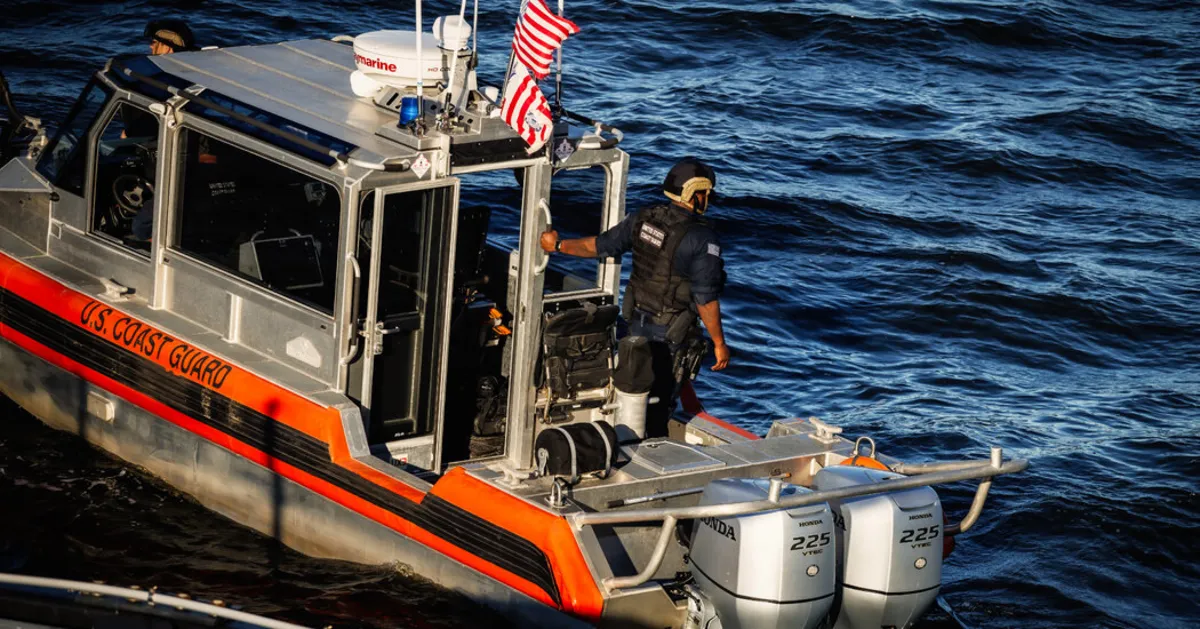
In a significant move against oil smuggling, the U.S. Coast Guard intercepted and boarded a Panamanian-flagged tanker, the Centuries, in the Caribbean early Saturday. This operation was confirmed by a U.S. official and two sources within Venezuela’s oil industry, all of whom requested anonymity due to the sensitive nature of the situation. This boarding marks the second such action taken by the United States this month targeting tankers transporting Venezuelan crude oil to Asia, intensifying the pressure campaign led by President Trump against Venezuelan leader Nicolás Maduro.
President Trump has publicly accused Maduro of contributing to the fentanyl crisis in the United States and of illegally appropriating oil from American companies, although he has not provided concrete evidence to support these claims. On Tuesday, Trump announced a “total and complete blockade of all sanctioned oil tankers going into and out of Venezuela,” signaling a hardline stance against the Venezuelan government. However, the Centuries, which was boarded on Saturday, is not listed on the U.S. Treasury Department's publicly available sanctions list.
According to insiders from Venezuela’s oil sector, the cargo aboard the Centuries belongs to a well-established oil trader based in China, known for transporting Venezuelan crude oil to Chinese refineries. The vessel had recently departed from Venezuelan ports and was navigating Caribbean waters when it was intercepted. Kristi Noem, the Secretary of Homeland Security, announced via a post on X (formerly Twitter) that the Coast Guard had “apprehended” the tanker that had been docked in Venezuela. She emphasized that the United States remains committed to combating the illicit movement of sanctioned oil used to finance narco-terrorism in the region, vowing that “we will find you, and we will stop you.”
While U.S. authorities have taken aggressive actions against vessels carrying Venezuelan oil, it remains unclear whether there was an intention to seize the Centuries as was done with another tanker last week. According to a U.S. official, American authorities did not possess a seizure warrant for the Centuries or its cargo at the time of boarding. The Pentagon has directed inquiries to the White House, which has yet to provide a response to the media's requests for further information.
As tensions escalate between the United States and Venezuela, President Maduro has ordered the Venezuelan navy to escort oil tankers departing from the nation's ports. Under international law, the U.S. Coast Guard is authorized to board vessels if there is reasonable suspicion that they are not legitimately registered under the flag they are flying. Officials are currently assessing the validity of the Centuries' Panama registration.
Previously, on December 10, U.S. agents boarded and seized a tanker named the Skipper, which also carried Venezuelan oil but was operating under a false flag and was already subject to U.S. sanctions for connections to Iranian crude oil. In that instance, federal authorities had a legal seizure warrant for the Skipper, citing its links to Iran, which the U.S. claims is involved in financing terrorism through oil sales. However, the Centuries has no known ties to Iran, as confirmed by sources in Venezuela’s oil industry. Notably, the Centuries transported fuel oil from Venezuela to China earlier this year, according to data from the state-owned oil company in Venezuela.
This ongoing situation highlights the complexities of international oil trade and the geopolitical tensions surrounding Venezuela's oil exports, as the United States continues to enforce strict measures against illicit oil trade.