

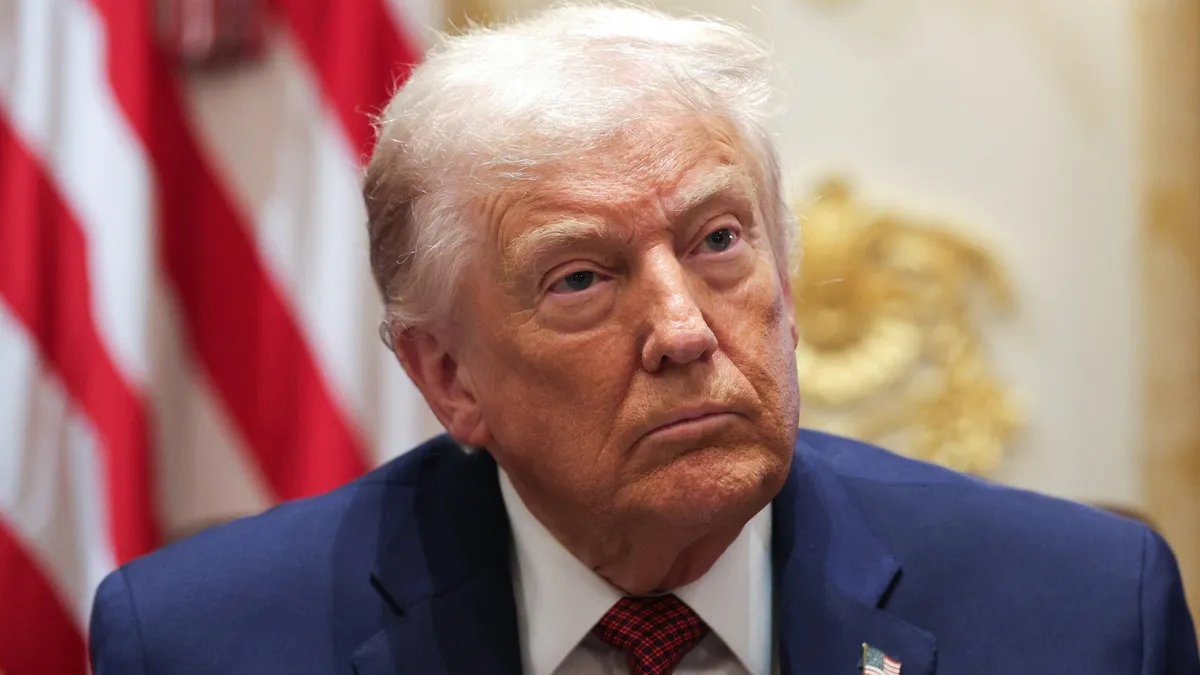
Tonight, President Trump is set to deliver a crucial primetime address as his approval rating hovers below 40 percent. This comes at a time when many Americans are expressing growing concerns about the state of the economy. In recent months, the public sentiment regarding economic conditions has turned increasingly bleak, leading to heightened scrutiny of the administration's economic policies.
While President Trump has recently downplayed the significance of affordability issues, it is widely believed that the Democrats' focus on pocketbook concerns helped them secure victories in key off-year elections last November. In an effort to counter this narrative, the President has taken to the road, advocating for his economic policies. During a recent rally in Pennsylvania, Trump assured his supporters that they could expect larger tax returns in April due to his administration's initiatives. He also highlighted the introduction of Trump accounts for children born between 2025 and 2028, aiming to showcase his commitment to future generations.
Despite these efforts, Trump's recent description of the economy as "A+++++" during a Politico interview was met with criticism, even from some conservatives, who deemed it tone-deaf given the current economic climate. Tonight's address presents an opportunity for the President to reclaim the narrative surrounding the economy, although the White House has indicated that he will also touch on a variety of issues.
According to White House spokeswoman Karoline Leavitt, the President will reflect on his historic accomplishments over the past year while potentially teasing new policies for the upcoming year as the Christmas season approaches. Leavitt specifically mentioned that Trump's address will likely focus on critical topics such as border security and lower gas prices.
The urgency of this address is underscored by the findings of the latest NPR PBS News Marist Poll, which reveals that Trump's approval regarding his handling of the economy has reached an all-time low. The poll shows that a significant 45% of Americans identify rising prices as their primary economic concern, far outpacing other issues such as housing prices, which are at 18%. The various tariffs imposed by President Trump are contributing to this inflation, as noted by Fed Chair Jerome Powell, who stated last week that inflation growth is primarily occurring in goods rather than services, particularly in sectors affected by tariffs.
As President Trump prepares to address the nation, the focus will undoubtedly be on how he intends to respond to these pressing economic challenges and regain the confidence of the American people.