

On Tuesday, former President Donald Trump announced his call for a total blockade on all sanctioned oil tankers that either enter or depart from Venezuela. This bold move is part of an escalating strategy by the Trump administration to apply pressure on Venezuelan President Nicolás Maduro at sea, while also leaving the possibility open for potential land strikes. Trump emphasized on Truth Social that Venezuela is surrounded by the largest naval fleet ever assembled in South America, declaring, "It will only get bigger, and the shock to them will be like nothing they have ever seen before," until they return the oil, land, and other assets they allegedly seized from the United States.
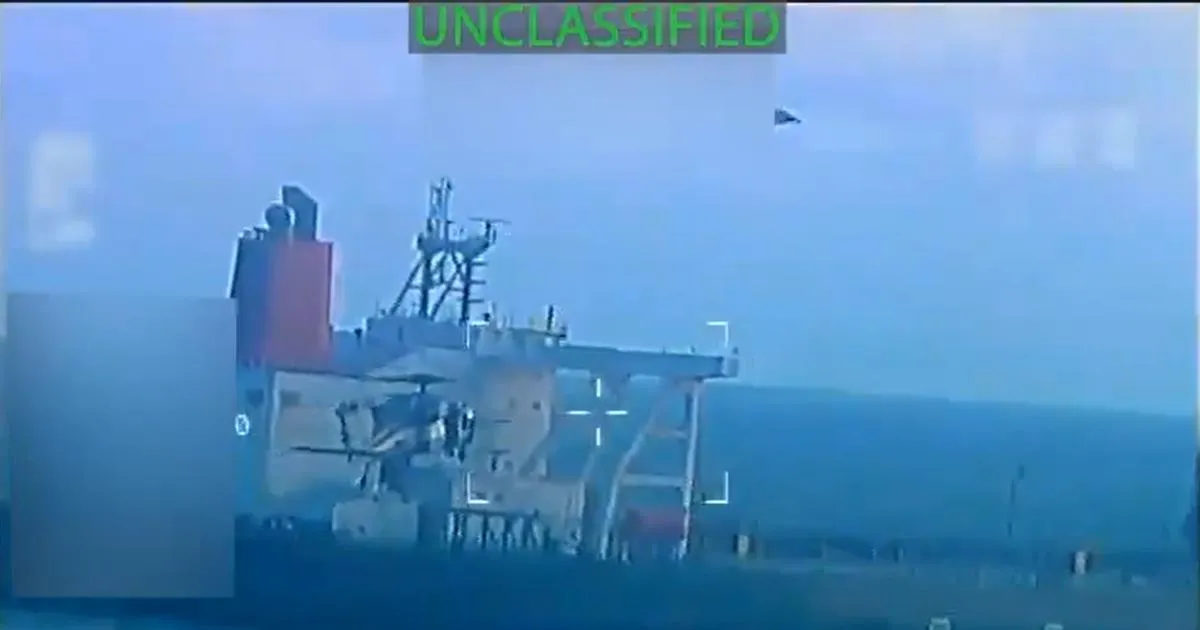
In recent developments, the U.S. military seized a sanctioned oil tanker last week that had just departed from a Venezuelan port. This operation, reported by CBS News, involved armed personnel who approached the vessel in helicopters. The tanker had been under U.S. Treasury sanctions for three years due to its involvement in an oil smuggling network believed to financially support the Iranian military and its regional proxies. Trump's announcement on Tuesday night indicates that further vessel seizures may be imminent, although it remains unclear how many additional vessels would be affected by the proposed blockade.
The Venezuelan government has condemned last week's seizure, labeling it as robbery and piracy. In a statement, they referred to the planned blockade as a "grotesque threat" and a violation of international law, accusing the Trump administration of attempting to appropriate the country's oil, land, and minerals through what they describe as large-scale campaigns of deceit.
Despite the intensifying measures, White House National Economic Council Director Kevin Hassett expressed doubts about whether future boat seizures would impact global oil prices. Speaking on CBS News' Face the Nation, he did not confirm if a total blockade was under consideration but mentioned that the administration is focused on clamping down on a black market for oil. Venezuela, known for being a significant oil producer with some of the largest petroleum reserves globally, has faced heavy sanctions from the U.S. for several years due to human rights violations and electoral fraud allegations.
Sanctioned oil producers, including Venezuela, Russia, and Iran, have sought to circumvent U.S. restrictions, reportedly using a shadow fleet of older oil tankers with dubious registrations. This evasion tactic has posed challenges for U.S. federal authorities. Since returning to office in January, Trump has intensified economic pressure on Maduro, who has been accused of collaborating with drug cartels—a claim the Venezuelan government vehemently denies.
In addition to recent sanctions against six ships linked to Venezuelan oil transportation, the Trump administration has targeted three nephews of Maduro, two of whom face narcotics trafficking allegations. In a recent social media post, Trump accused the Maduro regime of utilizing oil exports to finance various criminal activities, including drug terrorism, human trafficking, murder, and kidnapping.
To further exert pressure, the Trump administration is considering designating the Cartel de los Soles, a loosely organized group allegedly led by Maduro, as a foreign terrorist organization. Notably, Maduro himself faces a $50 million bounty for his capture, stemming from narcotics trafficking charges filed in U.S. federal court in 2020.
Moreover, the U.S. military has increased its presence in the Caribbean, deploying naval vessels and fighter jets, while conducting operations against at least 25 boats suspected of drug trafficking from Latin America. Trump has hinted at the possibility of land-based strikes targeting drug operations in Venezuela and other nations, which would represent a significant military escalation. Maduro's government has denounced this military buildup, accusing the Trump administration of seeking regime change, and has vowed to defend itself against any potential military operations.