

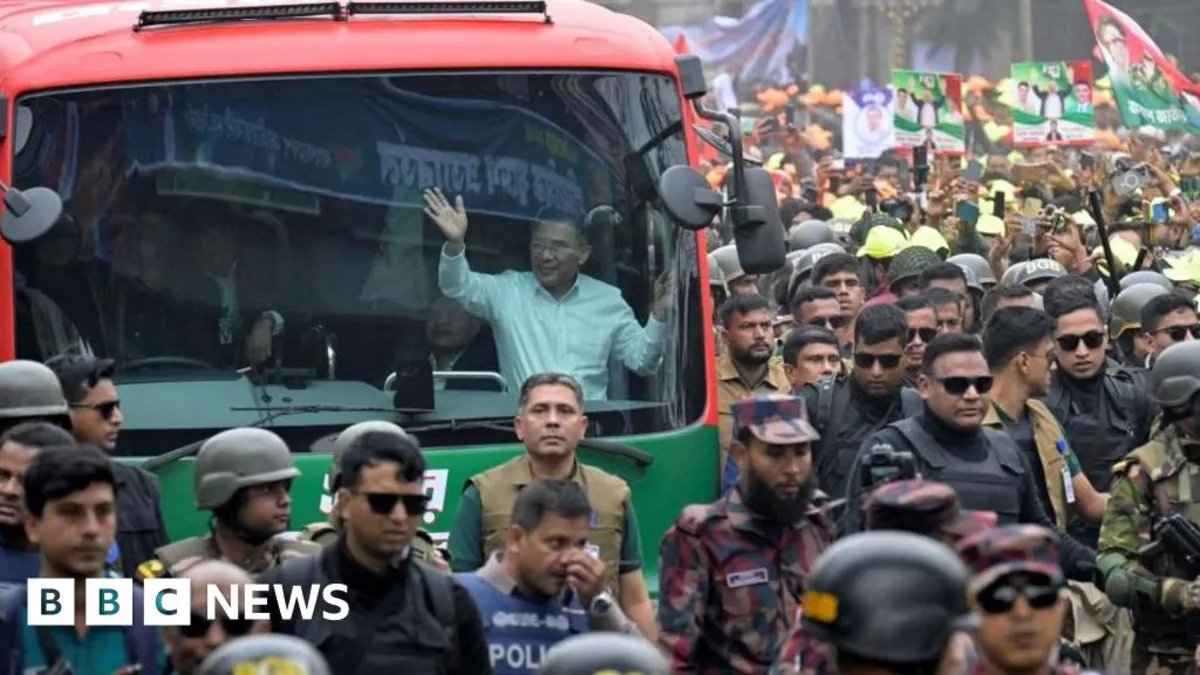
Tarique Rahman, a prominent political figure and the front-runner to become the next prime minister of Bangladesh, has made a significant return to his homeland after 17 years of exile. This comeback comes just ahead of the landmark general elections scheduled for the new year, making it a crucial moment in the country’s political landscape.
The 60-year-old Tarique Rahman is a key representative of the influential Zia family and is the son of former Prime Minister Khaleda Zia. He currently leads the Bangladesh Nationalist Party (BNP), which is gearing up for a potential return to power as the nation approaches the polls. The BNP's resurgence could reshape the political dynamics of Bangladesh, especially given the historical context of the party's rivalry with the Awami League.
Rahman's return to Bangladesh follows a tumultuous political period, marked by the ousting of former Prime Minister Sheikh Hasina last year. During Hasina's tenure, Rahman faced numerous criminal investigations; however, he has since been cleared of all charges after her regime fell. This shift in power dynamics has opened a pathway for Rahman and the BNP to potentially claim leadership.
As the political situation unfolds, Hasina is currently living in exile in India, and her party, the Awami League, may be barred from participating in the upcoming elections. This exclusion is significant, as many analysts view these elections as some of the most consequential in the history of Bangladesh. In a shocking turn of events, Hasina was recently sentenced to death for her involvement in suppressing anti-government protests, which, according to UN investigators, resulted in the deaths of up to 1,400 individuals during the unrest.
As the political atmosphere in Bangladesh continues to evolve, the international community is closely monitoring the situation. Rahman's potential leadership could bring about substantial changes in governance and policy direction, depending on the BNP's success in the elections. The outcome will not only affect domestic politics but could also have far-reaching implications for regional stability and international relations.
In conclusion, Tarique Rahman's return to Bangladesh marks a pivotal moment for the BNP and the nation as a whole. With the elections on the horizon, all eyes are on the political maneuvers and strategies that will unfold in the coming months, setting the stage for a new chapter in Bangladeshi politics.