

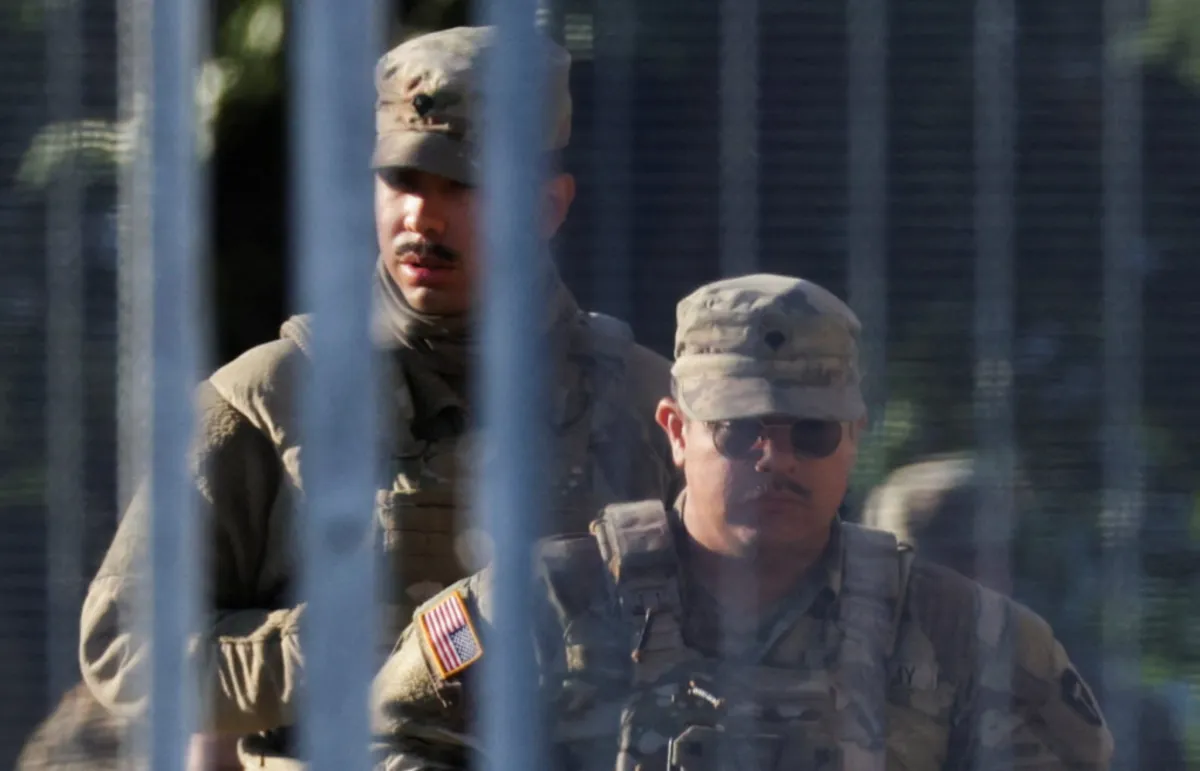
On Tuesday, the Supreme Court made a significant decision by refusing to permit the Trump administration to deploy National Guard troops in the Chicago area to support its ongoing immigration enforcement efforts. The justices declined an emergency request from the Republican administration to overturn a ruling by U.S. District Judge April Perry, which had previously blocked the troop deployment. This ruling was further upheld by an appeals court, leading to the Supreme Court's intervention after more than two months of deliberation.
The Supreme Court's decision was not unanimous; three justices—Samuel Alito, Clarence Thomas, and Neil Gorsuch—publicly dissented from the ruling. While the high court's order is not a final ruling, it could have implications for other ongoing lawsuits that challenge President Donald Trump's attempts to mobilize military forces in other Democratic-led cities.
This outcome represents a rare setback for Trump at the Supreme Court, which has generally favored his administration's actions in previous emergency appeals since he took office earlier in January. The conservative-leaning court has previously allowed Trump to implement various controversial policies, including banning transgender individuals from military service and reallocating billions of dollars in federal spending.
The Trump administration initially sought judicial approval to deploy troops from both Illinois and Texas. However, approximately 200 National Guard troops from Texas were later reassigned back home from Chicago. The administration argued that these troops were necessary to safeguard federal personnel and property from potential violent resistance related to the enforcement of federal immigration laws.
In her ruling, Judge Perry stated that she found no substantial evidence suggesting that a rebellion was imminent in Illinois, nor did she believe that protests had impeded Trump's immigration initiatives. Initially, Perry blocked the troop deployment for two weeks, later extending her order indefinitely while the Supreme Court reviewed the case.
The tensions surrounding the immigration enforcement efforts have been particularly evident at the U.S. Immigration and Customs Enforcement (ICE) facility located in Broadview, a suburb of Chicago. This site has been the focal point of numerous protests, where federal agents have previously resorted to using tear gas and other chemical agents against demonstrators and journalists. Recently, local authorities arrested 21 protesters, with reports indicating that four officers sustained injuries during confrontations outside the Broadview facility.
The legal challenges regarding National Guard deployments extend beyond Illinois. The District of Columbia Attorney General, Brian Schwalb, is currently pursuing legal action to halt the deployment of over 2,000 guardsmen stationed in the nation's capital. In this case, 45 states have filed statements in federal court, with 23 backing the administration's actions and 22 supporting the attorney general's lawsuit.
Additionally, more than 2,200 troops from various Republican-led states remain in Washington, despite the crime emergency declared by Trump in August being lifted a month later. In Oregon, a federal judge has permanently blocked the deployment of National Guard troops, resulting in the reassignment of all 200 troops from California back home. Moreover, a state court in Tennessee ruled in favor of Democratic officials attempting to halt the ongoing National Guard deployment in Memphis, which Trump had likened to his crackdown in Washington, D.C.
Legal challenges regarding the National Guard's presence continue to evolve, with a judge in California ruling in September that the deployment in the Los Angeles area was illegal. Although only 300 troops remained by that time, the judge opted not to mandate their immediate withdrawal. The Trump administration has since appealed both the California and Oregon rulings to the 9th U.S. Circuit Court of Appeals.
A robust and free press plays a vital role in maintaining a healthy democracy. Supporting trusted journalism and civil dialogue is essential for fostering informed discourse on such critical issues.