

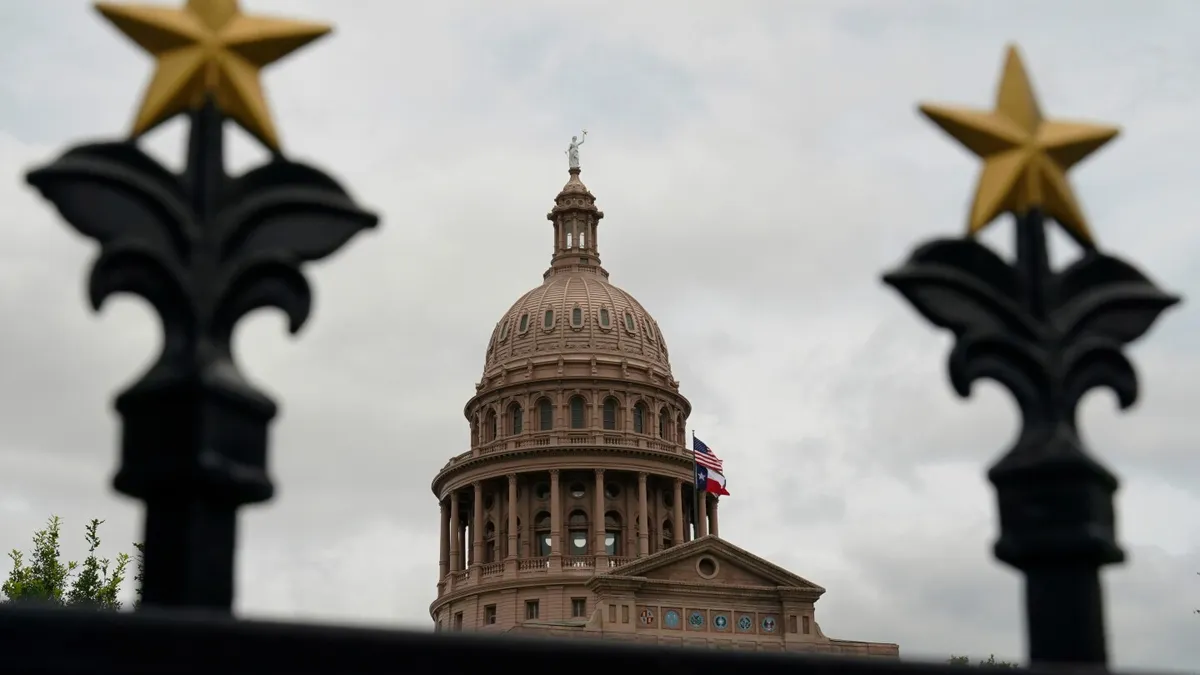
In a significant decision, the U.S. Supreme Court ruled on Thursday in favor of Texas Republicans, allowing the state's congressional redistricting plan to stand for the upcoming elections. This ruling comes despite concerns raised by a lower court, which indicated that the new map may discriminate based on race. With the backing of a conservative majority, the Court acted swiftly on an emergency request from Texas, as the qualification process for the new districts is already underway with primary elections set for March.
The Supreme Court's ruling effectively pauses a previous 2-1 ruling from a lower court that had blocked the Texas redistricting map. Justice Samuel Alito had temporarily halted the lower court's order while the Supreme Court reviewed the Texas appeal. The justices expressed skepticism regarding the lower court's findings, suggesting that the motivations behind the new map were primarily partisan rather than racially discriminatory. In an unsigned statement, the Court noted that Texas lawmakers were driven by “avowedly partisan goals.”
Justice Elena Kagan, representing the three liberal justices, dissented, arguing that the Supreme Court's intervention was premature. She warned that this decision would result in many Texas citizens being placed in electoral districts based on race, which she emphasized violates the Constitution. Kagan's dissent highlights the ongoing debate about race and representation in congressional redistricting.
This ruling signals a broader trend in redistricting cases, as the Supreme Court has consistently blocked lower court rulings in similar situations, including recent cases from Alabama and Louisiana. The Texas congressional map, enacted last summer under the influence of former President Donald Trump, is designed to provide Republicans with an additional five House seats, thereby preserving a slim GOP majority in the upcoming elections.
Texas has emerged as a focal point in the national redistricting battle, with other states like Missouri and North Carolina following suit in drawing maps that favor Republican candidates. Conversely, California voters have approved a ballot initiative aimed at securing additional Democratic seats. The ongoing legal disputes surrounding these redrawn maps underscore the contentious nature of the redistricting process, with challenges pending in both California and Missouri.
Texas Attorney General Ken Paxton praised the Supreme Court's decision, framing it as a defense of Texas's right to create a map that ensures Republican representation. He referred to the redistricting plan as the “Big Beautiful Map” and expressed confidence that Texas is leading the way in reclaiming political power. Governor Greg Abbott echoed this sentiment, declaring a victory for Republican representation in Texas.
In stark contrast, Democratic National Committee Chairman Ken Martin condemned the ruling, calling it morally and legally wrong. He criticized the Supreme Court for enabling what he termed a “rigged” map that could shield Republicans from accountability in future elections.
The state’s new congressional map has been criticized for diluting the political power of Black and Latino voters, with U.S. District Judges Jeffrey V. Brown and David Guaderrama noting that the map likely violates constitutional protections. Judge Brown acknowledged that while politics played a significant role in the map's creation, there was substantial evidence of racial gerrymandering.
As the Supreme Court continues to weigh cases related to redistricting, including a significant case from Louisiana that could further restrict race-based districts, the implications of the Texas ruling will be closely monitored. The evolving landscape of electoral redistricting remains a critical issue as the nation approaches the midterm elections.