

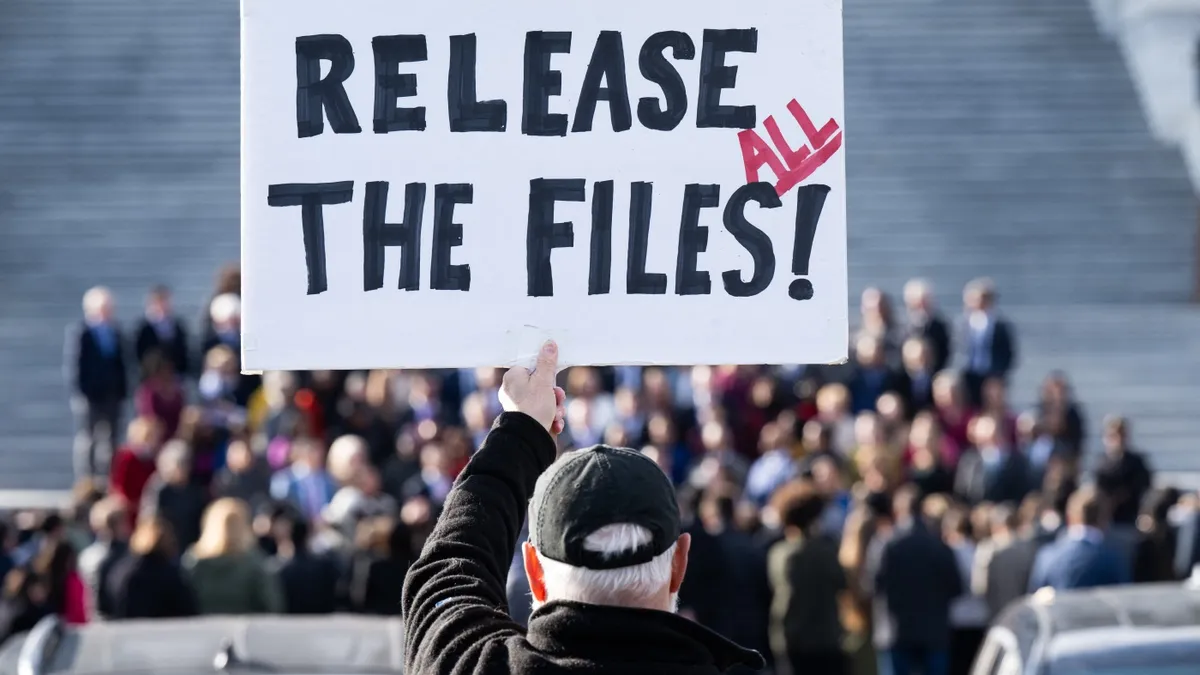
By law, the Justice Department has until Friday to release crucial files related to the life and death of Jeffrey Epstein. This release is mandated by the Epstein Files Transparency Act, which was signed into law by former President Trump last month. The act directs the attorney general to make publicly available, in a searchable and downloadable format, all unclassified records, documents, communications, and investigative materials held by the Department of Justice. This includes materials from the Federal Bureau of Investigation (FBI) and United States Attorneys' Offices pertaining to Epstein and his associate, Ghislaine Maxwell.
The law specifically targets the disclosure of information concerning individuals linked to Epstein's criminal activities. This encompasses any decisions not to charge Epstein and his associates, as well as any entities—corporate, nonprofit, academic, or governmental—that have known or alleged connections to Epstein's trafficking or financial networks. The files slated for release contain over 300 gigabytes of data and physical evidence currently held by the FBI, as well as internal Justice Department records from criminal cases against Epstein.
It is important to note that some of the files include sensitive materials such as photos and videos of Epstein's accusers, including minors, which will be withheld from public release. The text of the law emphasizes that no record shall be withheld, delayed, or redacted due to embarrassment, reputational harm, or political sensitivity, including to any government official, public figure, or foreign dignitary.
As the release date approaches, some members of Congress have voiced concerns regarding what information will be disclosed and when. Rep. Thomas Massie, R-Ky., a co-sponsor of the bill advocating for the release of the Epstein files, shared a 14-minute video online Thursday outlining his expectations. Massie indicated that he had spoken with lawyers representing some of Epstein's victims, who allege that the FBI possesses at least 20 names of men accused of sex crimes. He stated, "If we get a large production on December 19th and it does not contain a single name of any male who's accused of a sex crime or sex trafficking or rape, then we know they haven't produced all the documents."
While the law grants the Justice Department 30 days from Trump's signing to publish the files, it notably lacks a mechanism to enforce this deadline or to impose penalties for non-compliance. Furthermore, the law includes provisions that allow for redactions related to classified national security or foreign policy matters, as well as any information that could jeopardize ongoing federal investigations or prosecutions.
In recent weeks, Trump has urged the Justice Department to investigate Democrats and financial institutions mentioned in Epstein's private communications released by the House Oversight Committee, complicating potential disclosures. The attorney general is required to submit a report to the House and Senate detailing the categories of records released and withheld, a summary of any redactions made, and a list of all government officials and politically exposed persons referenced in the released materials without redactions.
House Minority Leader Hakeem Jeffries, D-N.Y., expressed that Democrats expect the Justice Department to comply with the upcoming deadline. He warned that failure to comply with federal law would result in strong bipartisan pushback.
Meanwhile, there has been a steady flow of document releases from both Democrats and Republicans on the House Oversight Committee, stemming from Epstein's private files that were turned over by his estate under a subpoena. The manner in which the Trump administration has handled the Epstein files—often downplaying the information—suggests that this release may not mark the end of the story.
Democrats have leveraged the released files and Trump's shifting narrative as one of the few tools available to challenge the Republican Party, which currently controls both Congress and the White House. Prior to reclaiming office, Trump and other influential figures vowed to release the Epstein files to unveil a supposed cabal of child predators being protected by the government, allegedly working to undermine Trump himself. Now, a segment of Trump's base is expressing concerns that he may be implicated in the cover-up.
Throughout this process, the accusers of Epstein and Maxwell have expressed their disappointment, feeling that their allegations of abuse have been weaponized in political battles within Washington.