

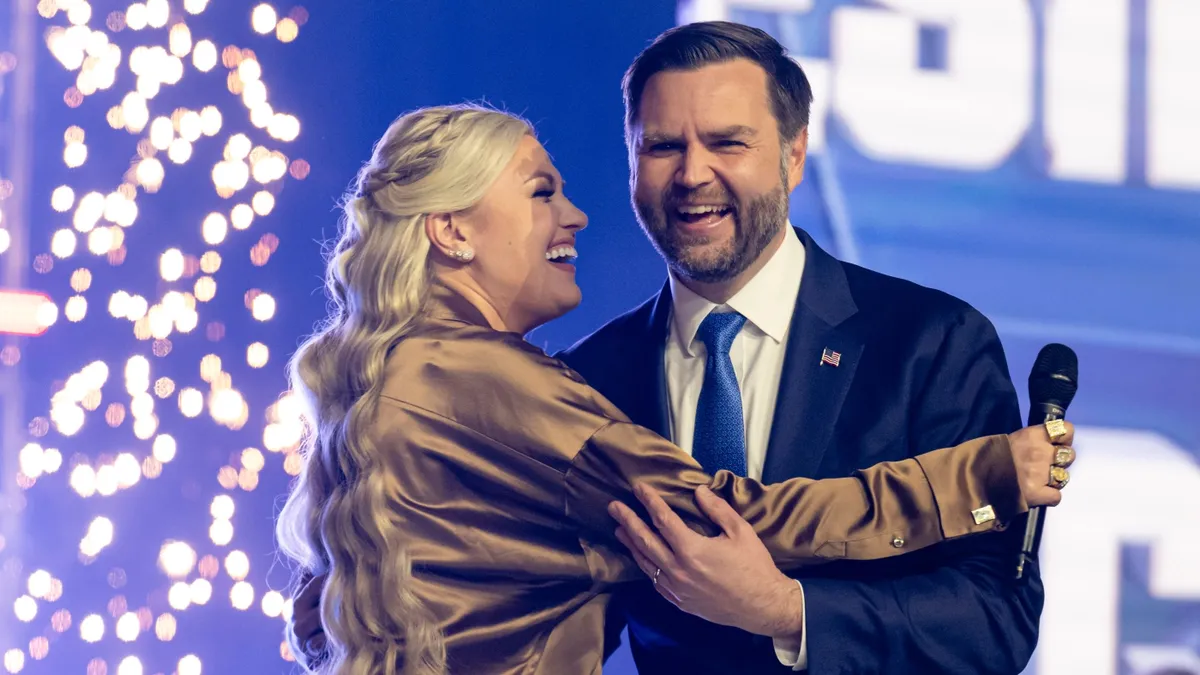
At the recent Turning Point USA convention in Phoenix, Vice President JD Vance emphasized that the conservative movement should be inclusive, welcoming anyone who expresses love for America. Despite a burgeoning wave of antisemitism that has created rifts within the Republican Party, Vance refrained from condemning specific individuals associated with these views, including controversial podcaster Nick Fuentes. His remarks come amidst heated discussions about whether the movement should impose exclusions against figures deemed unacceptable, marking a significant stance for a leading voice in the party.
During his closing speech at the convention, Vance firmly rejected the idea of purity tests within the conservative movement. “I didn't bring a list of conservatives to denounce or to de-platform,” he stated, signaling a desire for unity over division. This approach aligns with the leadership of Turning Point USA, particularly Erika Kirk, who stepped into her role following the tragic assassination of her husband, Charlie Kirk. Kirk has openly supported Vance as a potential successor to former President Donald Trump, highlighting his growing influence within a critical faction of the party.
The Republican Party's identity has been closely tied to Trump over the past decade. However, with Trump constitutionally unable to run for reelection, questions about who will lead the party into the future have become increasingly pressing. Tucker Carlson noted that many are curious about who will take control of the party's machinery once Trump exits the political stage. The discourse at the Turning Point conference revealed deep divisions among conservatives, emphasizing the challenges facing anyone vying for the next Republican presidential nomination.
The four-day Turning Point conference was marked by intense debates surrounding topics such as antisemitism, Israel, and environmental regulations. Prominent conservative voices like Ben Shapiro used their platforms to criticize those who misrepresent conservative principles by promoting conspiracy theories and dishonesty. Shapiro specifically called out Carlson for his previous interactions with Fuentes, underscoring the growing tensions within the movement.
In addressing the controversies, Vice President Vance articulated a vision for conservatism that extends beyond race and socioeconomic status. “We don’t care if you’re white or black, rich or poor, young or old, rural or urban,” he stated, emphasizing a patriotic foundation for the movement. His comments come at a time when figures like Fuentes and Candace Owens have gained traction, often promoting divisive narratives. Vance's assertion that “we have far more important work to do than canceling each other” reflects a push towards prioritizing unity and shared goals over divisive rhetoric.
While Vance has not publicly disclosed his political aspirations, Erika Kirk's endorsement suggests strong backing from Turning Point USA, a significant player in conservative politics with a robust volunteer network. This support could prove invaluable in early primary states, where grassroots engagement is crucial for building momentum. Additionally, rapper Nicki Minaj made a surprise appearance at the convention, praising both Trump and Vance, further solidifying Vance's connection to influential figures in the party.
As the political landscape evolves, Vance is positioned at a critical juncture for the Republican Party. His ability to unify diverse factions within conservatism while navigating the legacy of Trump will be vital as the party seeks to define its identity moving forward. With Trump acknowledging Vance as a likely frontrunner for future leadership, the coming years will be pivotal in shaping the direction of the GOP and its adherence to the core values of conservatism.