

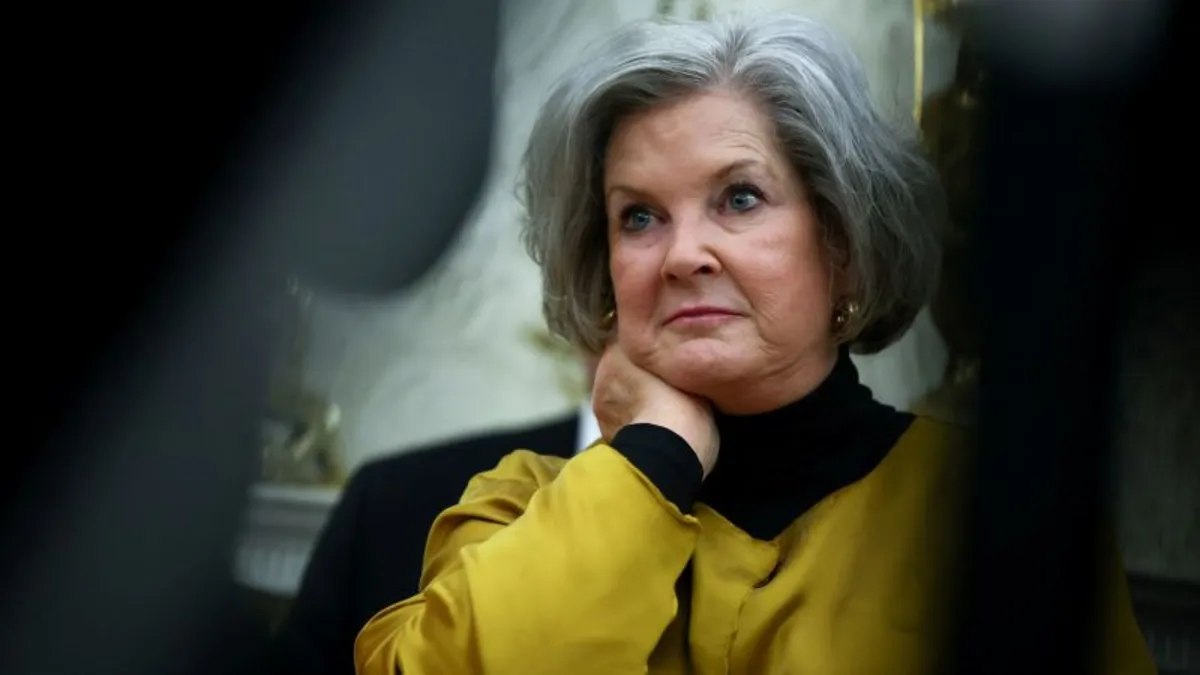
Eight years ago, Anthony Scaramucci, the former communications director for the Trump White House, delivered one of the most controversial political interviews in history. In his candid remarks, Scaramucci made unflattering comments about the White House's chief strategist and labeled the chief of staff as a “paranoid schizophrenic.” Recently, White House chief of staff Susie Wiles participated in a two-part interview with Vanity Fair that, while not as profane as Scaramucci's, is equally revealing. Wiles, known for her behind-the-scenes strategies, has made statements that could significantly impact the narrative surrounding the Trump presidency.
The Vanity Fair articles have stirred considerable controversy within the administration, prompting Wiles to distance herself from her own portrayal. In a statement on X, she described the piece as “a disingenuously framed hit piece on me and the finest President, White House staff, and Cabinet in history,” claiming it lacked context. Here are some key takeaways from Wiles' revealing interview.
One of the most striking moments from the interview is Wiles’ comment about former Attorney General Pam Bondi, stating she “completely whiffed” in managing the Jeffrey Epstein files. Wiles criticized Bondi for providing “binders full of nothingness” and claimed there was no evidence of a client list regarding Epstein. In response, Bondi praised Wiles on X, asserting that she fights for Trump’s agenda with “grace, loyalty, and historic effectiveness.”
Wiles also expressed concerns about Elon Musk’s chaotic approach to the Department of Government Efficiency, suggesting that no rational person could endorse the process under USAID as effective. “Elon’s attitude is you have to get it done fast,” Wiles remarked, hinting at Musk’s alleged use of ketamine, which she suggested might contribute to the disorderly environment. While she later denied these quotes to The New York Times, the publication confirmed the authenticity of her statements.
Regarding Vice President JD Vance, Wiles described him as a “conspiracy theorist” and critiqued his transition from a Never-Trumper to a loyalist, suggesting it was more politically motivated than principled. Vance, however, has maintained that his evolution stemmed from a realization of his previous misconceptions about Trump.
Wiles’ interview wasn’t solely centered on internal dynamics; she also challenged how key issues have been presented to the public. She indicated that the administration’s military actions against alleged drug boats in the Caribbean were not merely about stopping drug trafficking but were also intended to pressure Venezuelan President Nicolas Maduro. “He wants to keep on blowing boats up until Maduro cries uncle,” Wiles stated, a stark contrast to Trump’s public messaging.
Furthermore, Wiles expressed that Trump would require congressional approval for any land military operations in Venezuela, contradicting the president's previous assertions that he did not need such approval. This revelation highlights the complexities surrounding U.S. foreign policy and its implications for national security.
Wiles attempts to portray herself as neither an enabler nor a critic of Trump's more controversial policies. However, her comments suggest a willingness to accept many of Trump's decisions, even those she personally disagrees with. Wiles acknowledged her discomfort with various policies, including Trump’s tariffs and his handling of the January 6 events, yet seemed resigned to the fact that “bad stuff happens” in the current political landscape.
She described her role as one of attempting to mitigate some of Trump’s more extreme tendencies, yet her statements also reveal an underlying acceptance of his methods. In discussing Health and Human Services Secretary Robert F. Kennedy Jr., she remarked, “He pushes the envelope — some would say too far,” framing her justifications for Trump’s decisions in a similar light.
Wiles explicitly addressed Trump’s inclination toward retribution without labeling it as such. She noted that Trump and she had an informal agreement regarding his “score settling,” which clearly did not hold. While she insisted that Trump doesn’t wake up with retribution on his mind, she acknowledged that he takes opportunities for it when they arise, particularly regarding figures like New York Attorney General Letitia James.
In the midst of Wiles’ revelations, Marco Rubio hinted at the future of the GOP presidential primary, stating that if JD Vance were to run, he would support him wholeheartedly. This endorsement signals a potential shift in the Republican landscape as Vance emerges as a frontrunner in early polling.
Wiles raised alarm about Trump potentially alienating crucial voter demographics, particularly those interested in the Epstein case. She emphasized the importance of these new voters, who may not align perfectly with the traditional MAGA base, and expressed concerns that Trump's focus on foreign policy could detract from pressing domestic issues like economic affordability.
Despite these concerns, Wiles remained optimistic about the GOP's prospects for the upcoming midterms, stating, “We’re going to win the midterms.” However, her comments suggest a disconnect between Trump's messaging and the priorities of emerging voter blocs.
This comprehensive examination of Wiles' interviews reveals a complex portrait of the Trump administration, highlighting both internal tensions and external challenges. As the political landscape evolves, Wiles’ insights may play a crucial role in shaping future narratives surrounding Trump's presidency.