

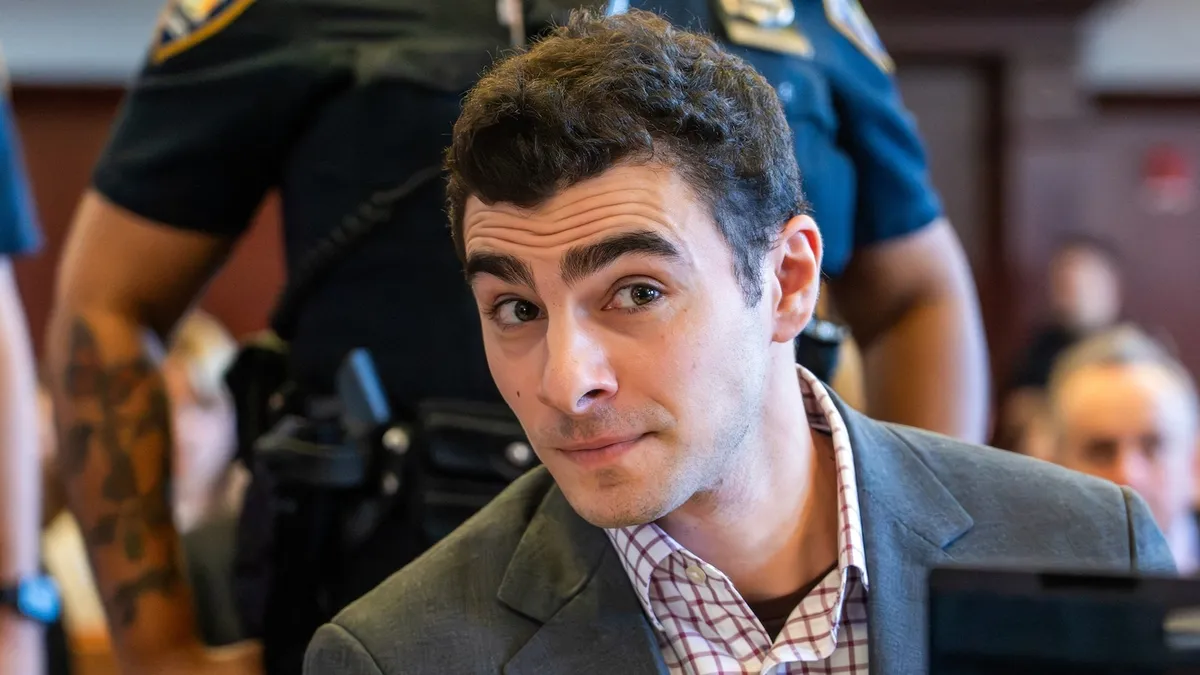
In a significant development in the murder case of UnitedHealthcare CEO Brian Thompson, prosecutors played the 911 call that ultimately led to the arrest of Luigi Mangione. This marked the first time the recording was presented in court as Mangione faced a multi-day hearing in New York City. This hearing will play a critical role in determining the admissibility of vital evidence in his state murder trial.
Luigi Mangione, aged 27, was apprehended at a McDonald's in Altoona, Pennsylvania, just five days after the tragic shooting of Thompson in Midtown Manhattan last year. The McDonald's manager made a call to a Blair County emergency dispatcher, sounding the alarm that a customer bore a striking resemblance to the suspect wanted for Thompson's murder. The dispatcher confirmed the report, stating, "I got you," as the manager described Mangione's attire and demeanor.
The 911 call was played during the testimony of Emily States, the 911 coordinator for Blair County Emergency Services. In the recording, the manager described an older female customer who was visibly upset after spotting Mangione enjoying breakfast. This customer was attempting to discreetly observe the suspected killer, prompting the manager to contact authorities. "I can't approach him," the manager stated, identifying Mangione by his distinctive black jacket, surgical mask, and tan beanie.
As the recording continued, the dispatcher assured the manager that officers were en route to the scene. Mangione had been in the McDonald's for approximately ten minutes when the call was made at 9:14 a.m. on December 9. The manager reported that customers believed Mangione resembled the shooter from New York City, further heightening the urgency of the situation.
Altoona police officers were dispatched shortly after the 911 call, arriving at the scene by 9:16 a.m. The dispatcher’s radio transmission indicated a male suspect matching the description of the NYC shooter was at the McDonald's. Officer Joseph Detwiler confirmed receipt of the report and began gathering information about Mangione. It was later revealed that Mangione allegedly presented police with a fake ID, which he had also used when checking into a hostel in New York prior to the shooting.
During the hearing, the judge has not yet ruled on the admissibility of the 911 audio. Mangione's defense team is actively working to suppress key evidence, including a 3D-printed gun and alleged journal entries that prosecutors claim illustrate a motive for the crime.
As the court proceedings unfolded, the prosecution introduced images captured by surveillance cameras, allegedly showing Mangione at various locations around the time of the murder. These images reportedly depict him at a Starbucks, on a bicycle, and even in a taxi with a weapon aimed at Thompson as he approached the Hilton in Midtown. The NYPD had previously released these images to the public, seeking assistance in identifying the suspect and offering a reward for information leading to his arrest.
During the testimony of Sgt. Christopher McLaughlin, a video was played that allegedly shows Mangione firing multiple shots at Thompson, who was struck and collapsed against a building facade. Prosecutors aim to establish Mangione as the primary suspect, although defense attorneys continue to raise questions regarding the legality of Mangione's arrest at the McDonald's.
The defense contends that the Altoona police officers questioned Mangione for an extended period without reading him his rights and conducted a search of his backpack without a warrant. Mangione's attorneys claim this violates his constitutional rights. They have requested New York State Supreme Court Judge Gregory Carro to suppress any evidence obtained during what they describe as an illegal interrogation.
Defense lawyers argue that police created an intimidating environment, surrounding Mangione while he was having breakfast. They also allege that officers waited twenty minutes to inform him of his rights and did not clarify the nature of their investigation.
This week's hearings in New York's State Supreme Court are critical, as they will determine the direction of Mangione's case. If the defense succeeds in limiting the evidence, including his writings that prosecutors assert indicate a clear motive, the prosecution's case could be significantly weakened. Mangione is currently charged with second-degree murder and faces the possibility of life in prison or even the death penalty in a separate federal case.
As the courtroom drama unfolds, the eyes of the public remain focused on this high-profile case, particularly given the tragic circumstances surrounding the murder of Brian Thompson, a dedicated father and long-time leader in the healthcare industry.