

In a significant diplomatic incident, France, Germany, the European Union (EU), and the United Kingdom expressed their discontent on Wednesday regarding the recent decision by the U.S. to impose travel bans on five European individuals. The Trump administration accuses these individuals of pressuring tech companies to censor or suppress American perspectives. This move has raised eyebrows across the Atlantic, with leaders and officials denouncing what they perceive as unjustified action.
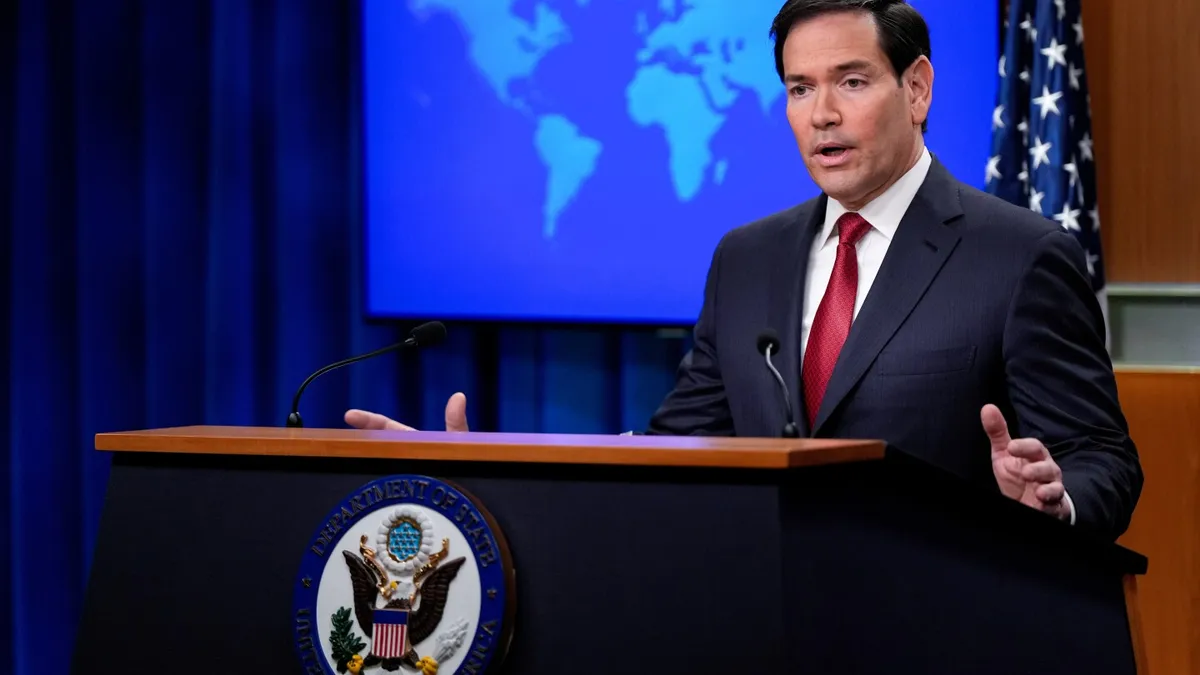
The European Commission, the executive branch of the EU responsible for overseeing tech regulation in Europe, has warned that it will take measures against any “unjustified actions.” The Commission has formally requested clarification from the U.S. State Department, which announced the travel bans on Tuesday. The individuals targeted by the U.S. are described by Secretary of State Marco Rubio as “radical” activists and representatives of “weaponized” non-governmental organizations.
Among those banned is Thierry Breton, the former EU commissioner who previously oversaw social media regulations. Breton, who is also a seasoned businessman and former finance minister, had a notable online clash with tech billionaire Elon Musk. This exchange occurred last year when Musk was criticized for broadcasting an online interview with Donald Trump during the critical lead-up to the U.S. elections. Rubio stated on social media that “for far too long, ideologues in Europe have led organized efforts to coerce American platforms to punish American viewpoints they oppose.”
In light of the U.S. decision, French President Emmanuel Macron took to X (formerly Twitter) to express his support for Breton, stating, “We will stand firm against pressure and will protect Europeans.” Macron emphasized that the EU’s digital regulations were established through a “democratic and sovereign process,” involving all member states and the European Parliament. He further asserted that these rules are designed to ensure fair competition among platforms without unfair targeting of any third country.
The other four Europeans facing U.S. travel bans include Imran Ahmed, the CEO of the Center for Countering Digital Hate; Josephine Ballon and Anna-Lena von Hodenberg, leaders of the German organization HateAid; and Clare Melford, director of the Global Disinformation Index. German Foreign Minister Johann Wadephul criticized the bans as “not acceptable,” indicating that Germany plans to discuss the U.S. interpretation of the EU’s digital rules to strengthen transatlantic partnerships.
EU Council President António Costa also denounced the U.S. travel bans, calling them “unacceptable between allies, partners, and friends.” He reaffirmed that the EU is committed to defending freedom of expression, maintaining fair digital rules, and upholding its regulatory sovereignty. Meanwhile, the U.K. government acknowledged the right of each country to establish its own visa regulations but expressed support for laws and institutions aimed at keeping the internet free from harmful content.
The five individuals fell afoul of a new visa policy introduced in May, which aims to restrict entry for foreigners considered responsible for censoring protected speech in the United States. Rubio remarked that these individuals have supported foreign government efforts to censor American voices, which he claims could lead to “potentially serious adverse foreign policy consequences” for the U.S. This action is part of a broader campaign by the Trump administration to counter foreign influence over online discourse, utilizing immigration law rather than direct regulatory measures.
In a rebuttal to the criticisms from U.S. officials, Breton was labeled “the mastermind” behind the EU’s Digital Services Act, which imposes strict requirements to keep users safe online. This legislation mandates the flagging of harmful or illegal content, including hate speech. In his response on X, Breton pointed out that all 27 EU member states voted in favor of the Digital Services Act in 2022, reinforcing the notion that European regulations are a collective decision. He concluded with a pointed message to American officials: “Censorship isn’t where you think it is.”
This unfolding story highlights the ongoing tensions between the U.S. and Europe regarding digital governance and the rights to free expression in the online landscape. As both sides navigate these complex issues, the implications for international relations and digital policy will be closely watched.