

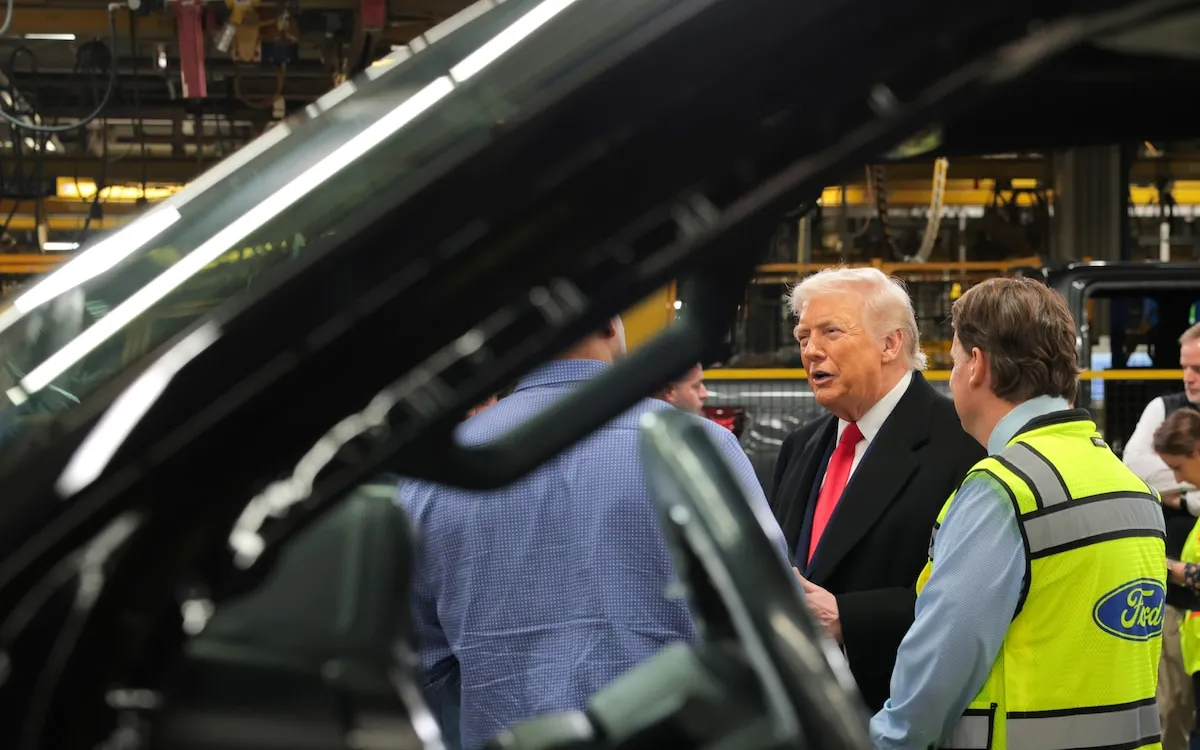
In a recent incident that has garnered significant media attention, former President Donald Trump was caught on video responding to a heckler during a tour of a Ford plant in Michigan. The video shows Trump mouthing an expletive and making an obscene gesture with his middle finger in reaction to a factory employee's remarks. This incident has sparked discussions about Trump's demeanor and public conduct.
The individual responsible for the heckling later spoke to The Post, expressing no regrets about their actions. "As far as calling him out, definitely no regrets whatsoever," the heckler stated, emphasizing their viewpoint on Trump's behavior. This sentiment reflects a growing trend among individuals who feel empowered to speak out against public figures, especially in settings where they feel strongly about issues at stake.
Following the incident, the White House commented on Trump's reaction, labeling it as "appropriate" given the context of the heckling. This defense of Trump's behavior has ignited debates regarding the appropriateness of such responses from political leaders, particularly in public forums where they are expected to maintain a level of decorum.
Such incidents can significantly influence public perception of political figures. Trump's gesture, while defended by some, may not sit well with all constituents, potentially impacting his support base. As political discourse continues to evolve, the reactions of leaders like Trump are under increased scrutiny, especially in light of the current political climate.
This incident at the Ford plant serves as a reminder of the intersection between politics and public sentiment. As social media amplifies these moments, the repercussions of such actions can resonate far beyond the immediate context, shaping the narrative around leaders like Donald Trump and their engagement with the public.