

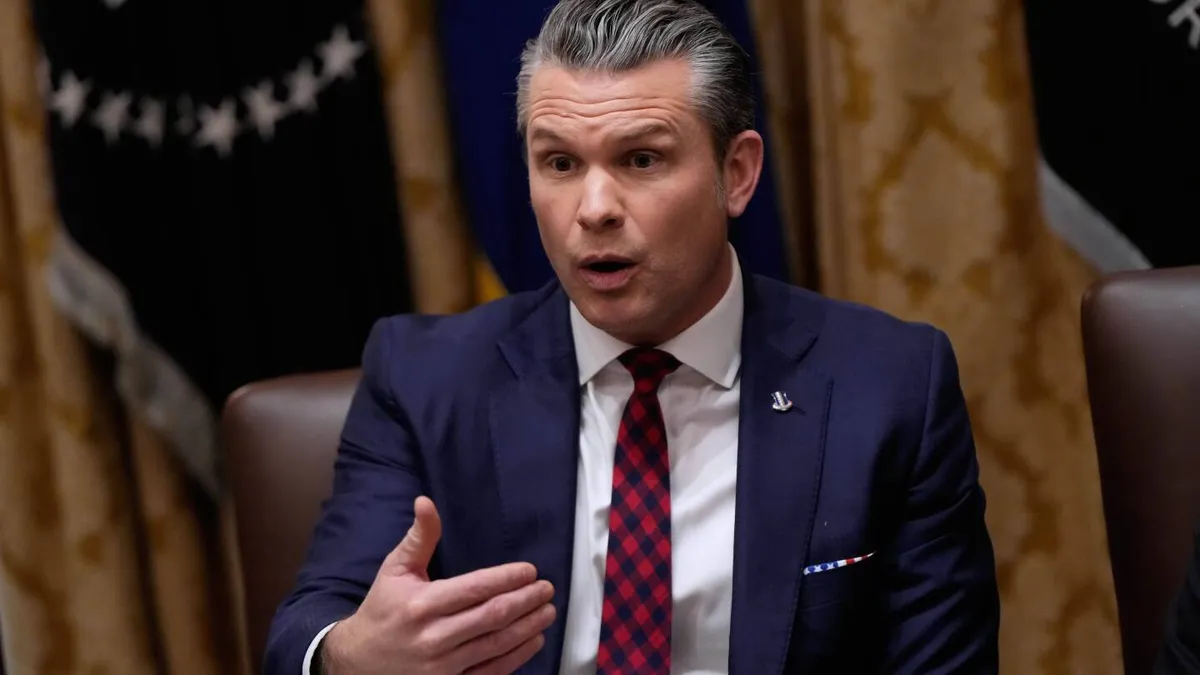
Pete Hegseth has faced a tumultuous journey since his confirmation as Secretary of Defense earlier this year. Despite a narrow victory in the Senate confirmation process, Hegseth, known for his role as a host on Fox News Channel, encountered significant skepticism from lawmakers regarding his ability to manage the U.S. military effectively. Just months into his role, he found himself embroiled in a scandal dubbed Signalgate, where he and other high-ranking officials utilized the Signal messaging application to discuss impending military actions in Yemen.
As if that controversy weren't enough, Hegseth is now under scrutiny for a second military strike that reportedly targeted survivors of an earlier operation against an alleged drug trafficking vessel off the coast of Venezuela. This action has raised serious concerns among lawmakers and legal experts, who argue that it may have violated the laws of armed conflict. Senator Roger Wicker, the Republican chair of the Senate Armed Services Committee, emphasized the gravity of the situation, stating, “These are serious charges, and that’s the reason we’re going to have special oversight.”
The mounting criticism reflects a deeper dissatisfaction within Congress regarding President Donald Trump’s decision to appoint Hegseth as the head of the U.S. military. As investigations commence by congressional committees, Democratic senators are increasingly calling for Hegseth's resignation, marking a potentially pivotal moment in his career.
Since his appointment, Hegseth has advocated for a "warrior culture" within the Department of Defense, seeking to rebrand it as the Department of War and advocating for looser rules of engagement. He argues that such changes are essential for enhancing military effectiveness. During a speech at Quantico Marine Corps Base, Hegseth urged military leaders to abandon “stupid rules of engagement,” declaring that it was time to remove constraints on warfighters to maximize their effectiveness against enemies.
However, this aggressive approach has faced backlash. Critics assert that the recent military operation on September 2 may amount to illegal military action. Senator Thom Tillis, a North Carolina Republican, stated, “Somebody made a horrible decision. Somebody needs to be held accountable.” Additionally, Senator Chris Van Hollen, a Democrat from Maryland, called for Hegseth's resignation, labeling the action an “extrajudicial killing.”
Despite the growing discontent, President Trump has largely backed Hegseth in this tumultuous time. The ongoing investigations led by Wicker and other congressional leaders signify a rare moment of legislative authority over the Trump administration. Senate Majority Leader John Thune has voiced that the military actions fall within Trump’s authority as commander-in-chief, leaving Hegseth's future uncertain.
Nonetheless, Hegseth has found allies among Republican lawmakers, including Vice President JD Vance, who cast a decisive vote in favor of Hegseth's confirmation. Senator Eric Schmitt defended Hegseth against his critics, suggesting that the backlash he faces stems from his outsider status rather than his qualifications.
Frustration has been brewing among Republicans in Congress regarding the Pentagon's recent communication restrictions and the slow dissemination of information related to military operations targeting drug trafficking in Venezuela. As Hegseth navigates these challenges, he has engaged in discussions with committee leaders like Wicker and House Armed Services Chair Mike Rogers. While Rogers expressed satisfaction with their conversation, Wicker has indicated that he expects Hegseth to testify before Congress regarding the controversial military actions.
The upcoming testimonies and investigations will likely shape the trajectory of Hegseth's tenure as Secretary of Defense. With a history of controversy surrounding his confirmation—including allegations related to his management of nonprofits and personal conduct—Senator Tim Kaine pointed out that an individual’s character does not change upon appointment to a high office. As Hegseth faces intense scrutiny, the question remains: will he survive this political storm, or is his time as Secretary of Defense coming to an end?