

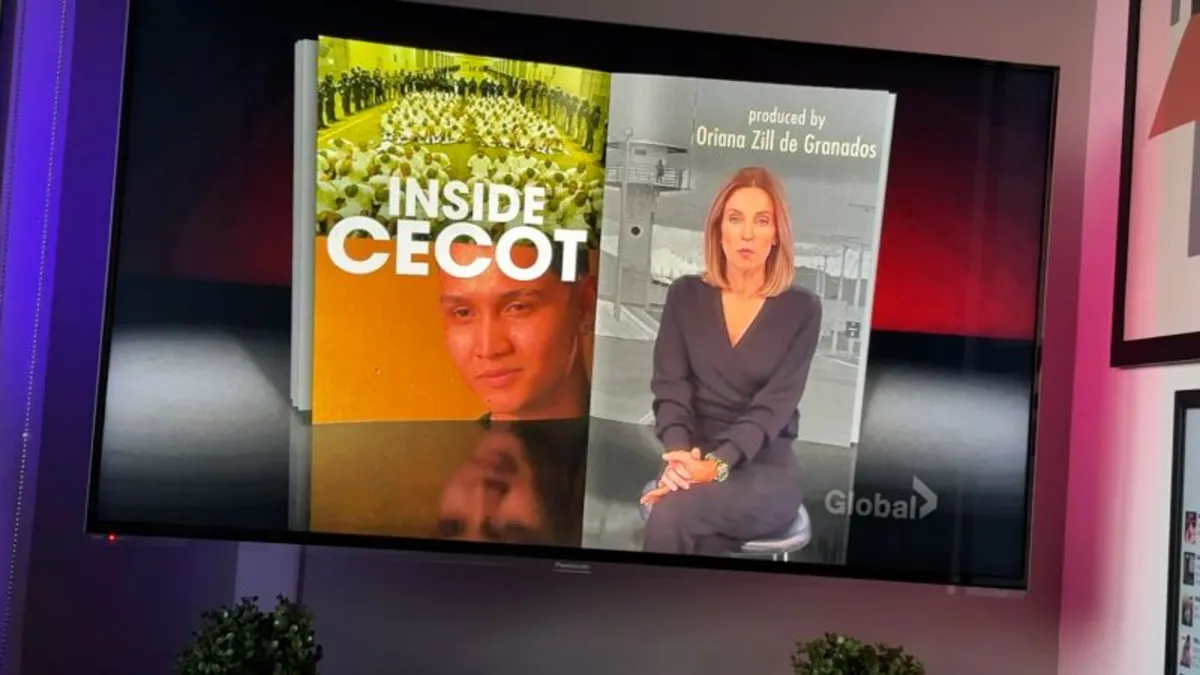
In a surprising turn of events, CBS News editor-in-chief Bari Weiss has decided to shelve a highly anticipated “60 Minutes” story titled “Inside CECOT.” This decision has sparked considerable uproar within CBS, yet the report has managed to capture a worldwide audience regardless. On Monday, Canadian viewers discovered that the pre-planned “60 Minutes” episode was available for streaming on a platform owned by Global TV, which holds the rights to the show in Canada.
The episode, which featured correspondent Sharyn Alfonsi, was blocked from airing in the US by Weiss, who claimed it was “not ready.” However, the Canadian broadcast highlighted the segment, leading to an outpouring of social media activity. Numerous viewers shared clips and summaries of the story across platforms like Reddit and Bluesky, with some users urging others to “watch fast,” anticipating that CBS would attempt to remove the videos.
Progressive writers and commentators on platforms such as Substack amplified these clips, encouraging widespread sharing. Notably, prominent Trump critic George Conway remarked on X, “This could wind up being the most-watched newsmagazine segment in television history.” A spokesperson for CBS News has yet to comment on this unexpected situation.
Alfonsi's report had been in development for several weeks, with Weiss screening it for the first time just last Thursday night. After its finalization on Friday, CBS announced the story in a press release. However, by Saturday morning, Weiss expressed concerns regarding the content, particularly the absence of responses from key Trump administration officials. This led to the pre-taped programming being inadvertently aired in Canada, as networks like CBS often deliver content to affiliates ahead of time.
A source within CBS described the Canadian stream as “the best thing that could have happened,” asserting that the Alfonsi piece was “excellent” and should have aired as initially planned. However, some close to Weiss contended that the segment was unbalanced due to its lack of interviews with Trump officials.
In a memo to staff, Weiss emphasized the need for perspectives from the principals involved, insisting on having them on record and on camera. Conversely, in a previous communication, Alfonsi claimed that her team had attempted to secure interviews, arguing that the refusal from officials was “a tactical maneuver designed to kill the story.” The segment concluded with a statement from Alfonsi noting that the Department of Homeland Security had declined their request for an interview, instead directing inquiries about CECOT to the government of El Salvador, which did not respond.
The segment included alarming testimonials from Venezuelan men who were deported to El Salvador, depicting horrific conditions in CECOT, one of the country’s most notorious prisons. “Tonight, you’ll hear from some of those men,” Alfonsi introduced the segment, which included disturbing accounts of torture and abuse. One former detainee, Luis Munoz Pinto, described the experience as “interminable,” recounting scenes of violence and despair.
The story also featured insights from a representative of Human Rights Watch, which had previously published an extensive report on the abuses occurring at the prison. Following the decision to shelve the segment, Alfonsi expressed her belief that Weiss had “spiked” the story for “political, not editorial reasons.” Philippe Bolopion, executive director at Human Rights Watch, expressed concern over these allegations, especially given the ongoing pressures on press freedom in the United States. “We look forward to the segment airing,” Bolopion stated. “The evidence is clear regardless of what airs on 60 Minutes: the Trump administration disappeared these Venezuelan men to a mega prison in El Salvador where they were systematically tortured.”