

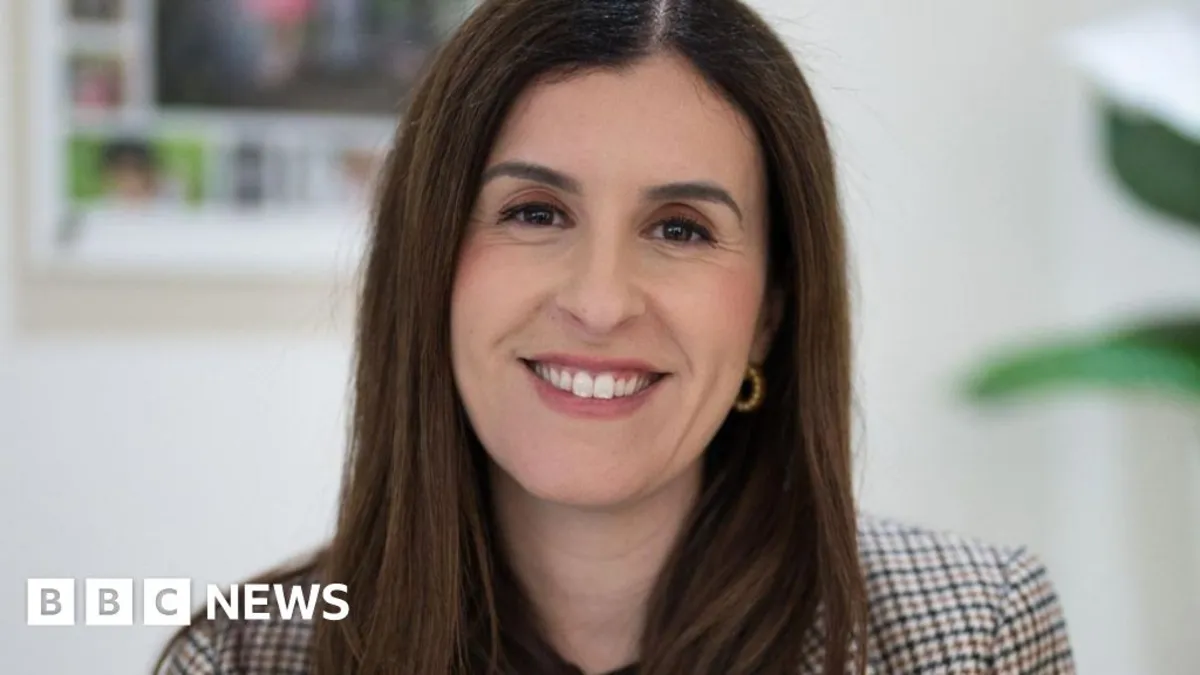
One of Australia's largest cultural events, the Adelaide Festival, has found itself in chaos following the controversial decision to disinvite prominent Australian-Palestinian author Dr. Randa Abdel-Fattah. This move has ignited a fierce backlash, resulting in numerous authors withdrawing from the festival and, ultimately, the cancellation of the much-anticipated Writers' Week. The decision to remove Abdel-Fattah from the festival lineup came in the wake of a tragic shooting incident at a Jewish festival in Bondi Beach, which left 15 individuals dead and was allegedly inspired by the Islamic State militant group.
The festival's board stated that while they do not imply any connection between Abdel-Fattah and the Bondi tragedy, they deemed it inappropriate to include her due to her outspoken criticism of Israel. Abdel-Fattah condemned the decision as a clear act of anti-Palestinian racism and censorship, labeling the connection made to the Bondi attack as despicable. In response to her disinvitation, a wave of writers began to withdraw from the festival, with the list of those pulling out quickly rising to 180, featuring notable figures such as former New Zealand Prime Minister Jacinda Ardern, acclaimed British author Zadie Smith, and beloved Australian writer Helen Garner.
Over the weekend, four members of the festival's eight-member board, including the chair, resigned, although they did not publicly state their reasons. The director of Writers' Week, who had originally invited Abdel-Fattah, also stepped down shortly thereafter. Louise Adler, whose Jewish heritage includes being the daughter of Holocaust survivors, emphasized that the arts have come under increasing scrutiny since the onset of the Israel-Gaza conflict. In a poignant statement to Guardian Australia, she expressed her dismay at the silencing of writers and the vital need for free expression, regardless of how discomforting it may be.
In light of the escalating situation, the board issued a new statement apologizing to Abdel-Fattah for how their decision was communicated and announced the cancellation of Writers' Week. They acknowledged the distress caused by their actions and indicated that all but one board member would resign in an effort to salvage the festival's future. This turmoil has left the Adelaide Festival boardless just weeks before the event's scheduled start, raising concerns about potential legal actions and reigniting debates about freedom of expression in Australia.
Dr. Randa Abdel-Fattah, a novelist, lawyer, and academic, was invited to discuss her latest work, Discipline, which she describes as a cautionary tale about the consequences of silence and cowardice. She has previously faced criticism for her statements challenging the notion of cultural safety for Zionists and for a controversial post on social media referencing decolonization and the end of what she calls the "murderous Zionist colony" in Israel. Following the October 7, 2023, Hamas attack on Israel—where approximately 1,200 people lost their lives—Abdel-Fattah posted an image on social media that many found inflammatory, depicting a person parachuting with a Palestinian flag. She later clarified that she had shared the image before understanding the full ramifications of the attack.
Abdel-Fattah has been subject to public scrutiny and campaigns aimed at her disinvitation from various events, including calls from some Australian Jewish organizations for the withdrawal of research funding awarded to her in 2024. However, she was ultimately cleared of wrongdoing regarding those allegations. Following her removal from the Adelaide Festival, she stated that Australian cultural institutions exhibit a profound disregard for Palestinian voices, emphasizing the notion that the only acceptable Palestinian perspective is one that remains "silent and invisible."
The fallout from the festival's decision has prompted a strong response from the literary community. Many writers who withdrew from the festival expressed their support for Abdel-Fattah's right to free speech, even if they did not necessarily agree with her views. Australian journalist Peter Greste, who has experienced imprisonment under politically charged circumstances, argued that excluding Abdel-Fattah undermines the capacity for difficult discussions. Similarly, writer Kathy Lette highlighted the importance of trusting audiences to engage with a range of perspectives.
Conversely, some, including former Australian foreign minister Bob Carr, supported the board's decision, suggesting that Abdel-Fattah's previous statements could be detrimental to the Palestinian cause. Carr maintained that the Adelaide Festival had a strong record of supporting Palestinian voices and that the board's decision was reasonable given the sensitivities surrounding the Bondi attack.
The Adelaide Festival's board has stated that their decision is not rooted in identity politics but rather reflects the changing landscape of freedom of expression in Australia following a significant terrorist attack. The board now faces the challenging task of reconstituting itself and ensuring the festival's success while also rebuilding trust with the artistic community. Abdel-Fattah, for her part, has rejected the board's apology, asserting that it primarily concerns the manner in which her cancellation was communicated rather than the decision itself.
As the situation continues to evolve, Abdel-Fattah's lawyer has demanded clarification regarding the reasons behind her disinvitation. The author has yet to decide whether to pursue legal action, but she remains steadfast in her advocacy for Palestinian rights. In her recent statements, she emphasized that the ongoing violence against Palestinians cannot be ignored and that the narrative surrounding her cancellation should not distract from the larger issues at hand.