

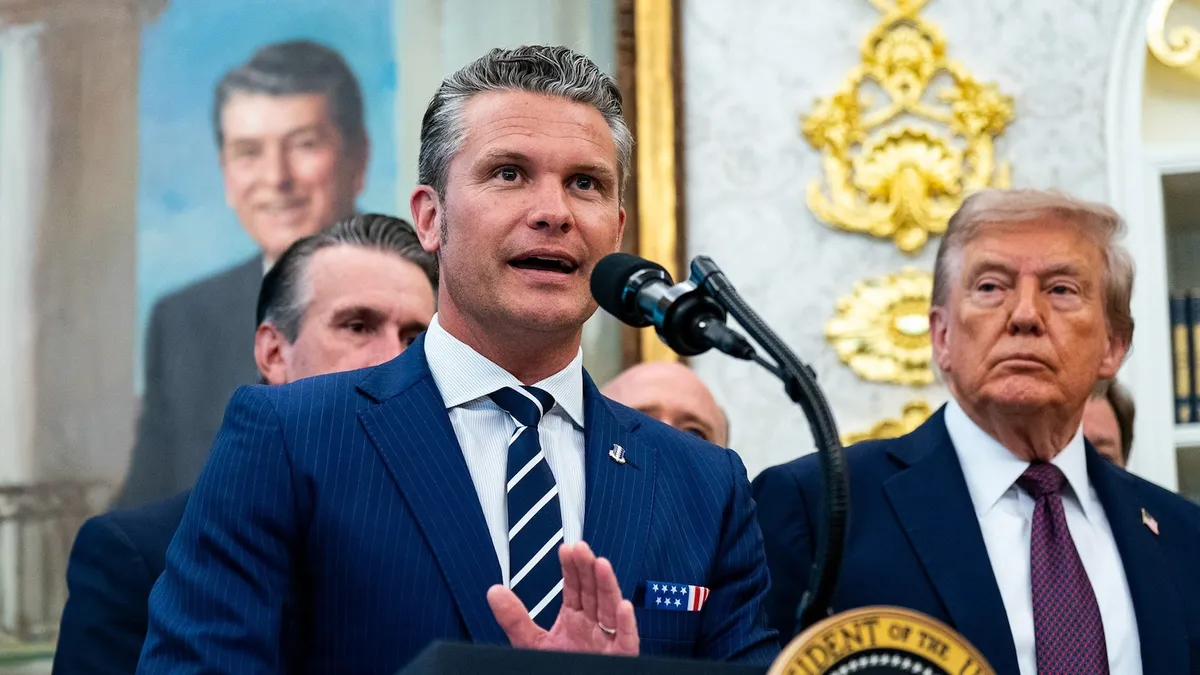
On September 2, President Donald Trump and defense officials announced a significant military operation in the Caribbean Sea, claiming responsibility for the deaths of 11 alleged drug smugglers onboard a boat. This strike was heralded as a pivotal success in the ongoing fight against South American drug cartels. However, the announcement quickly drew scrutiny due to the lack of specific details surrounding the incident.
Following the strike, questions arose about the operation, particularly after reports surfaced indicating that survivors from the initial attack were killed in a subsequent strike. The White House later confirmed that multiple strikes had occurred on the target boat. Trump initially shared the news on his social media platform, labeling the operation a "kinetic strike" against the Tren de Aragua Narcoterrorists, emphasizing their presence in the SOUTHCOM area of responsibility.
In his post, Trump included a video of the strike, which showcased only a single hit. He alleged that the boat was connected to Venezuelan President Nicolas Maduro, who promptly denied the accusations and criticized the U.S. for its actions. The day after the strike, Trump claimed that the boat was carrying "massive amounts of drugs," although he provided minimal details about the operation. He stated, "It was massive amounts of drugs coming into our country to kill a lot of people," underscoring the seriousness of the situation.
On September 3, Defense Secretary Pete Hegseth echoed Trump's sentiments during a Fox & Friends interview, asserting the legitimacy of the video footage and refuting claims from Maduro's spokesperson that it was artificially generated. "That was definitely not artificial intelligence. I watched it live," Hegseth stated, reinforcing the administration's position that they were aware of who was aboard the vessel and their intentions.
The U.S. military would go on to report an additional 20 strikes against boats in the Caribbean and eastern Pacific Ocean, resulting in the deaths of 83 individuals. During a White House event on October 23, Hegseth emphasized that suspects on these boats would be treated as members of foreign terrorist organizations, stating, "We're going to defeat and destroy these terrorist organizations to defend the homeland on behalf of the American people."
Amidst the escalating operations, reports emerged about the treatment of survivors from the strikes. Following a subsequent attack on another vessel, survivors were released to their home countries of Colombia and Ecuador, which prevented them from challenging their detention in a U.S. court. When asked about the future treatment of survivors, Hegseth acknowledged that protocols were in place but refrained from providing specific details.
Later, questions arose regarding the legality of the strikes following a November 28 report from the Washington Post. The article claimed that the first strike on September 2 had left two survivors clinging to wreckage, and it alleged that Hegseth had given orders to eliminate everyone on board. This report included accounts from two individuals with direct knowledge of the operation, suggesting that a second strike was ordered to prevent survivors from contacting other traffickers.
Concerns about the operation were voiced by members of Congress from both parties. In response to the Washington Post's findings, leaders from the House and Senate armed services committees issued joint statements indicating they were investigating the incidents. Hegseth publicly defended the legality of the strikes, and Trump expressed his support for him, claiming he had no knowledge of the details mentioned in the report.
Trump stated, "I wouldn't have wanted a second strike," emphasizing his belief that the initial attack was sufficient. Following this, White House Press Secretary Karoline Leavitt clarified that Admiral Frank Mitch Bradley had authorized the second strike but did not elaborate further.
On a subsequent Cabinet meeting, Hegseth reiterated the administration's commitment to targeting drug boats and eliminating threats posed by narcoterrorists. "We've only just begun striking narco-boats and putting narcoterrorists at the bottom of the ocean because they've been poisoning the American people," he stated. He later clarified that he did not witness any survivors during the attack video, attributing this to the chaotic nature of the situation.
As the situation continues to evolve, the U.S. military's aggressive stance against drug cartels has sparked debates about legality, ethics, and the broader implications for international relations in the fight against drug trafficking.