

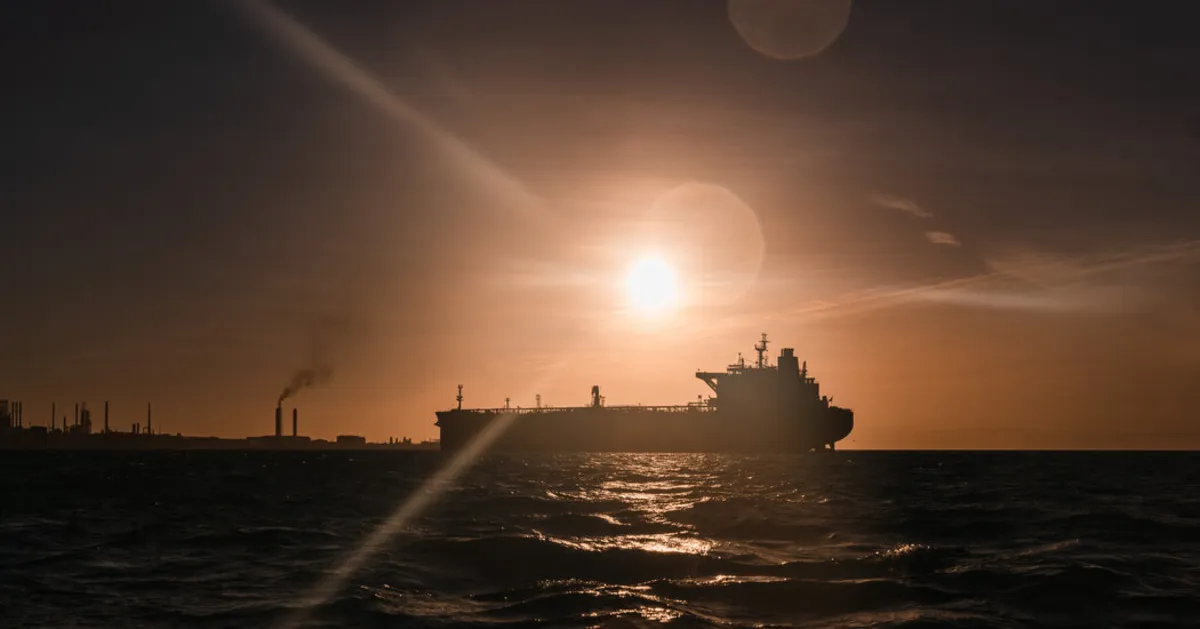
In a significant move that heightens the tensions between Venezuela and the United States, the Venezuelan government has ordered its Navy to escort ships carrying petroleum products from its ports. This decision comes in the wake of President Trump's announcement of a “blockade” targeting the country's vital oil industry. The escalation raises the likelihood of a confrontation as both nations navigate this complex geopolitical landscape.
Reports indicate that several vessels set sail from the eastern coast of Venezuela with military escort between Tuesday evening and Wednesday morning. These vessels departed mere hours after President Trump expressed his intentions to implement a blockade against oil tankers that engage in business with Venezuela. The ships, which are transporting urea, petroleum coke, and other oil-based products, left from the Port of José and are headed towards Asian markets, according to sources who requested anonymity due to the sensitive nature of the situation.
The Venezuelan government's decision to impose a military escort for these vessels directly responds to President Trump's threats regarding U.S. sanctions and the enforcement of a blockade. Notably, the ships traveling under escort did not appear on the current list of U.S. sanctioned vessels, leaving uncertainty about their potential exposure to the blockade.
President Trump clarified on Tuesday that his focus was on oil tankers that have violated U.S. trade sanctions. A U.S. official familiar with the unfolding events confirmed that Washington is aware of the naval escorts and is considering various responses, although no specific details were disclosed. This situation marks a pivotal moment in the ongoing standoff between the U.S. and Venezuela.
In a statement released on Wednesday, Venezuela's state oil company, PDVSA, asserted that ships connected to its operations are continuing to navigate “with full security, technical support, and operational guarantees in legitimate exercise of their right to free navigation.” This declaration underscores the Venezuelan government's commitment to protecting its oil shipments despite external pressures.
On Tuesday evening, President Trump announced a “total and complete blockade” of tankers transporting oil to and from Venezuela that have violated U.S. trade sanctions. According to estimates from Samir Madani, co-founder of TankerTrackers.com, approximately 40 percent of the tankers that have carried Venezuelan crude in recent years are currently under U.S. sanctions. This statistic highlights the significant impact of U.S. policies on Venezuela's oil industry.
In a related development, U.S. law enforcement officials recently seized a tanker bound for Asia that was carrying nearly two million barrels of Venezuelan crude. This action represents a notable escalation in President Trump's confrontational stance against Venezuelan President Nicolás Maduro, whose government heavily relies on oil exports for revenue. In recent discussions, U.S. officials have privately suggested that further seizures of tankers carrying Venezuelan oil may occur, although additional details have not been provided.
As the situation continues to evolve, the international community watches closely, understanding that the outcome could have significant implications for global oil markets and U.S.-Venezuela relations.