

On Saturday morning, many Americans woke to shocking news: the United States had invaded Venezuela and captured its dictatorial leader, Nicolás Maduro. Initial disbelief quickly turned into a flurry of questions about the political implications of this bold military action. What does this mean for American foreign policy, and how should the citizens interpret these developments? Let's delve into the key takeaways as the situation unfolds in Caracas.
This military move marks a stark contrast for President Donald Trump, who campaigned on an America First platform that explicitly opposed foreign intervention. Within a year of his second term, Trump has engaged in military actions across seven countries, including a daring nighttime raid in Venezuela this past weekend. The U.S. forces successfully captured Maduro and his wife, transporting them to New York to face charges of drug trafficking. This unexpected action has raised eyebrows, particularly given Trump's historical opposition to neoconservative policies that favored endless wars and nation-building.
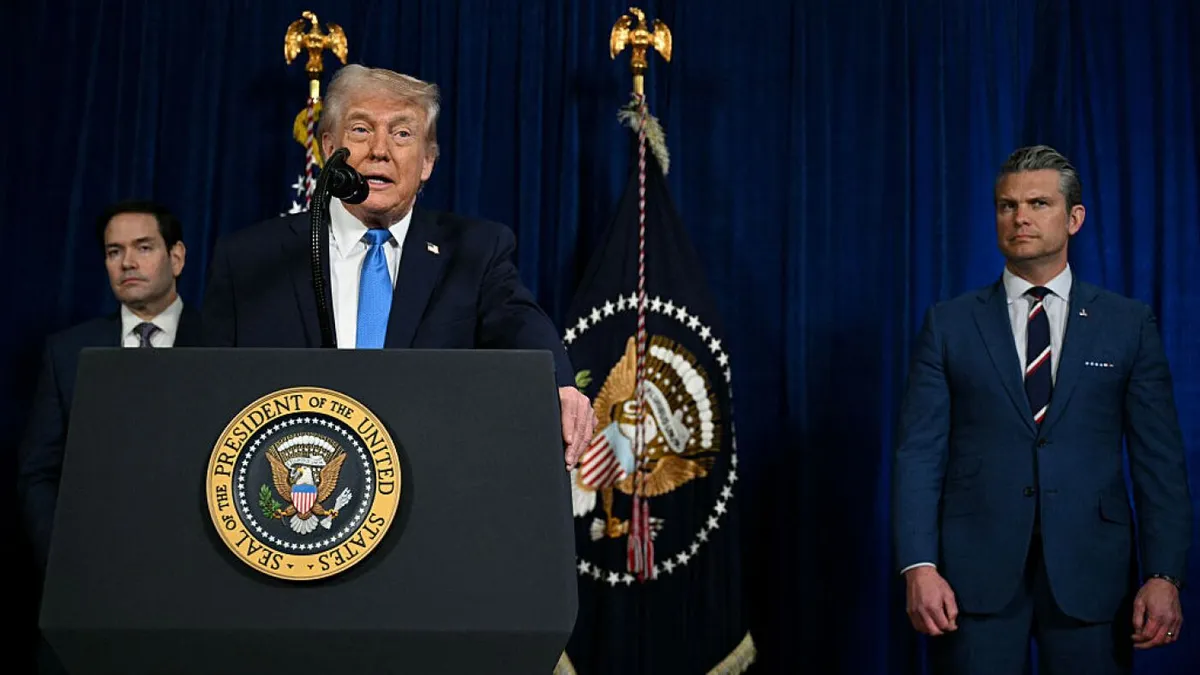
During a press conference on Saturday, Trump asserted that the U.S. would manage Venezuela until a suitable leader could be found. He indicated that a team, including Secretary of State Marco Rubio and Defense Secretary Pete Hegseth, would oversee this effort, with Rubio later attempting to reframe the invasion as a "quarantine" aimed at policy change.
The justifications for removing Maduro echo the shifting rationales presented during the U.S. invasion of Iraq over two decades ago. Initially, the Bush administration cited various reasons for intervention, from the need to eliminate a dictator to the alleged existence of weapons of mass destruction. In the case of Maduro, U.S. leaders have pointed to regime change, drug trafficking, and oil interests as potential motivations. During the recent press conference, Trump highlighted the significance of oil, claiming that American companies would invest billions to modernize Venezuela’s oil production, supposedly benefiting the Venezuelan populace. However, the management of these investments remains unclear.
Trump's history of advocating for the U.S. to "take the oil" from Iraq adds another layer to the discussion. His comments have shifted from criticizing U.S. purchases of Venezuelan oil during his presidency to a bold statement that America should control the resources.
The recent military action underscores Marco Rubio's increasing influence in Trump’s foreign policy decisions. Historically more hawkish than Trump, especially concerning Latin America, Rubio played a crucial role in the Venezuela operation announcement and defended it on major news platforms. In Trump's second term, Rubio has taken on multiple significant roles, further solidifying his position within the administration's inner circle.
While Trump labeled Maduro a "dictator" multiple times, his history of engaging with various other authoritarian leaders raises questions about the consistency of U.S. foreign policy. From praising Hungary's Viktor Orbán to cozying up to Saudi Arabia's Mohammed bin Salman, Trump’s approach suggests a selective outrage towards left-wing dictators. This discrepancy calls into question the motivations behind the U.S. actions in Venezuela and whether similar justifications could be applied to other authoritarian regimes.
Despite the irony of Trump’s military intervention given his past campaign promises against such actions, it appears unlikely that his base will abandon him. The MAGA movement remains deeply committed to Trump, supported by a robust conservative media landscape that shapes narratives favorably towards his administration. Polls indicate that while a majority of Americans oppose military action in Venezuela, a significant portion of Republicans endorse it, reflecting a historical trend towards a hawkish foreign policy within the party.
As the political landscape evolves, Democrats must navigate their messaging carefully. House Minority Leader Hakeem Jeffries has challenged claims that the U.S. actions were merely a counter-narcotics operation, asserting that it constitutes an act of war. However, focusing solely on the legality of the intervention could backfire politically. Democrats need to balance highlighting the hypocrisy of Trump's drug-related justifications while also addressing pressing domestic issues such as healthcare and the economy.
Ultimately, the true test of this military intervention will hinge on what follows. Americans have been skeptical of foreign interventions not due to military capabilities but rather due to concerns over the aftermath. Trump’s vague responses when questioned about future plans for Venezuela signal potential vulnerabilities in his second term. As he approaches his 80th birthday with declining approval ratings, this latest action may be an attempt to divert attention from other pressing political challenges.
In conclusion, the U.S. invasion of Venezuela presents a multifaceted scenario that raises significant questions about foreign policy, party loyalty, and the long-term implications for American involvement abroad.