

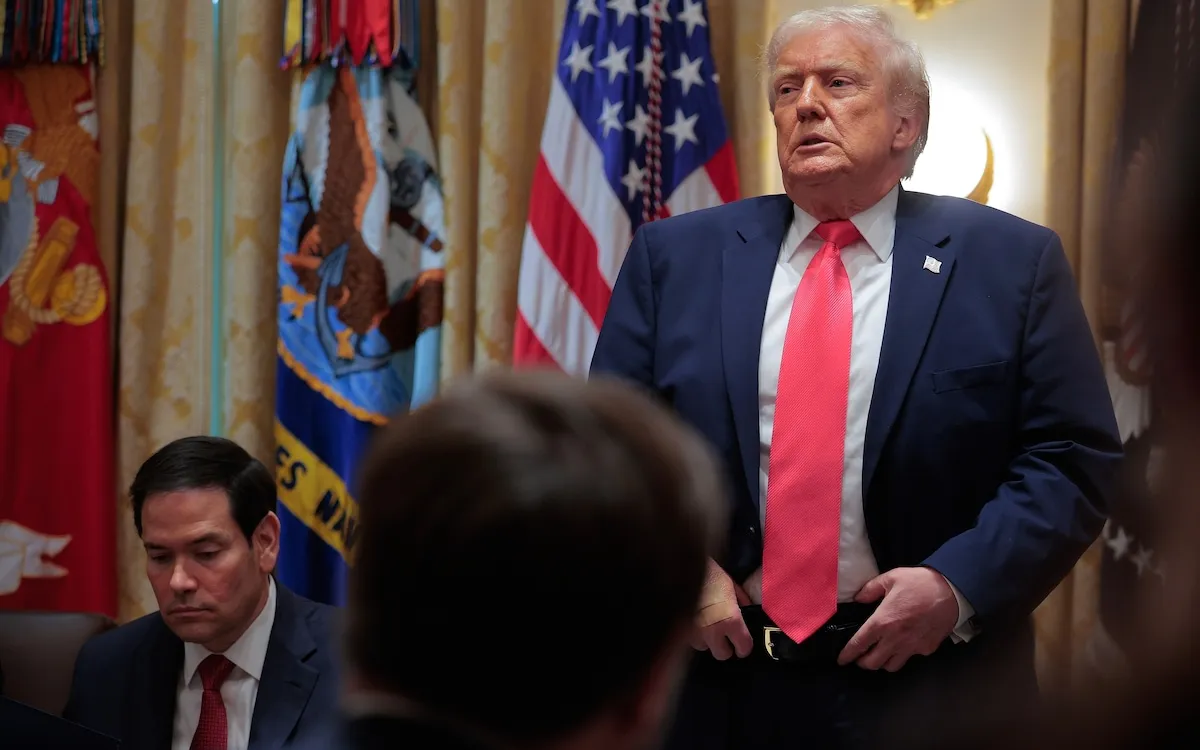
In a surprising turn of events, the day after President Donald Trump made bold claims regarding the significant reduction of seaborne drug trafficking to the United States, he unveiled a fresh justification for his intensified campaign against Venezuelan President Nicolás Maduro. Trump asserted that his administration had successfully curtailed illegal migrant border crossings to “zero,” a statement that has drawn both skepticism and scrutiny from various sectors.
During a press briefing, Trump declared that his administration had achieved an impressive 94 percent reduction in drug trafficking via maritime routes, emphasizing a significant win in the ongoing battle against drug cartels and smugglers. These comments came amidst rising concerns over the influx of illicit substances into the U.S. and the devastating impact of the opioid crisis on communities nationwide.
However, shortly after these remarks, President Trump pivoted to a new narrative, framing his administration’s actions against Maduro as part of a broader strategy to combat drug trafficking and illegal immigration. This marked a notable shift in focus, as the administration has increasingly targeted Venezuela, citing its government’s alleged ties to drug cartels and its role in the regional migration crisis.
Trump's approach signals a continuation of the hardline stance against Maduro, who has faced accusations of human rights violations and corruption. The U.S. government has imposed numerous sanctions aimed at crippling the Venezuelan economy and pressuring Maduro to step down. By linking drug trafficking and illegal migration to Venezuela, Trump is attempting to unify his policy agenda under a common theme of national security.
As President Trump continues to assert that he has brought illegal migrant border crossings to zero and drastically cut drug trafficking, the implications of his new rationale against Nicolás Maduro will likely reverberate through U.S. foreign policy. This evolving narrative not only shapes perceptions of Venezuela but also highlights the administration’s priorities in addressing both domestic and international challenges.