

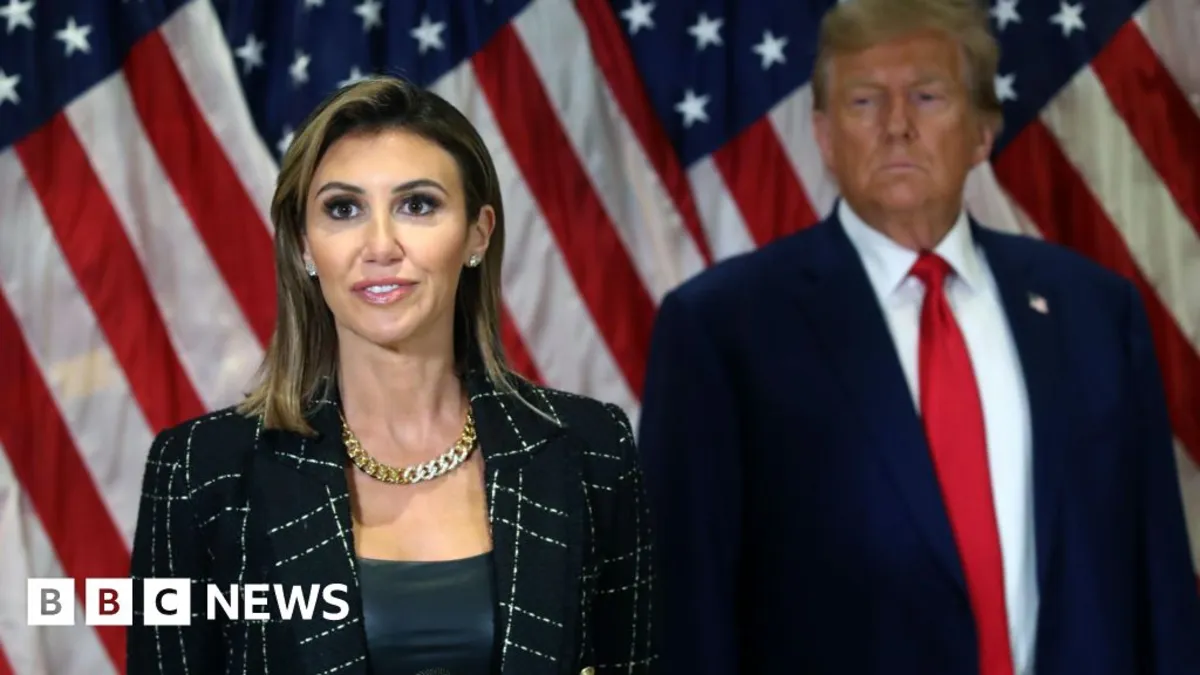
A significant ruling from a US appeals court has determined that Alina Habba, former personal lawyer to President Donald Trump, unlawfully served as the top federal prosecutor for New Jersey. This decision is poised to impact numerous criminal cases throughout the state, raising concerns about the integrity of the legal appointments made by the Trump administration.
In a controversial move earlier this year, President Trump appointed Habba as the US attorney for New Jersey. However, her nomination was rejected by a district court. Undeterred, the Trump administration appointed her in an acting capacity, a decision that has now been deemed unlawful. The appellate judges ruled that this tactic effectively bypassed the necessary confirmation by the US Senate, violating the Federal Vacancies Reform Act.
This ruling is particularly consequential as it marks the disqualification of the second Trump-appointed prosecutor in recent weeks, highlighting an ongoing trend of legal challenges against such appointments. Judge Michael Fisher, one of the appellate judges, noted in the ruling that the current administration has faced significant frustrations over the legal and political barriers to securing legitimate appointments.
Three lawyers who contested Habba's authority—Abbe David Lowell, Gerry Krovatin, and Norm Eisen—issued a joint statement asserting that this ruling represents a critical precedent. They emphasized that it is the first instance where an appeals court has confirmed that President Trump cannot overstep established statutory and constitutional processes to appoint individuals to important legal positions.
Alina Habba, 41, joined Trump's personal legal team in 2021 after a chance meeting at his golf club in Bedminster, New Jersey. She gained notoriety for representing Trump in his hush-money trial in New York, where he faced 34 counts of falsifying business records. Trump has since filed an appeal against that conviction, further complicating the legal landscape.
The appellate court's ruling may compel the Justice Department to seek a new prosecutor to manage federal criminal cases in New Jersey. This decision follows an earlier ruling in August, where a federal judge sided with three individuals facing criminal charges, determining that Habba's appointment was unlawful. The order had been suspended while the appeals court deliberated on the matter.
Habba is not the first Trump-appointed prosecutor to encounter legal hurdles. Recently, a federal judge dismissed charges against former FBI Director James Comey and New York Attorney General Letitia James, citing that the US attorney overseeing the case, Lindsey Halligan, was unlawfully appointed as acting US attorney in Virginia. Additionally, in October, a US district judge disqualified Bill Essayli from his position as acting US attorney for the Southern District of California, though he was allowed to continue as first assistant US attorney.
This ruling against Alina Habba underscores the challenges faced by the Trump administration in securing legal appointments that adhere to established protocols. As the legal landscape continues to evolve, the implications of this case may resonate through the broader arena of federal prosecutions and appointments across the country.