

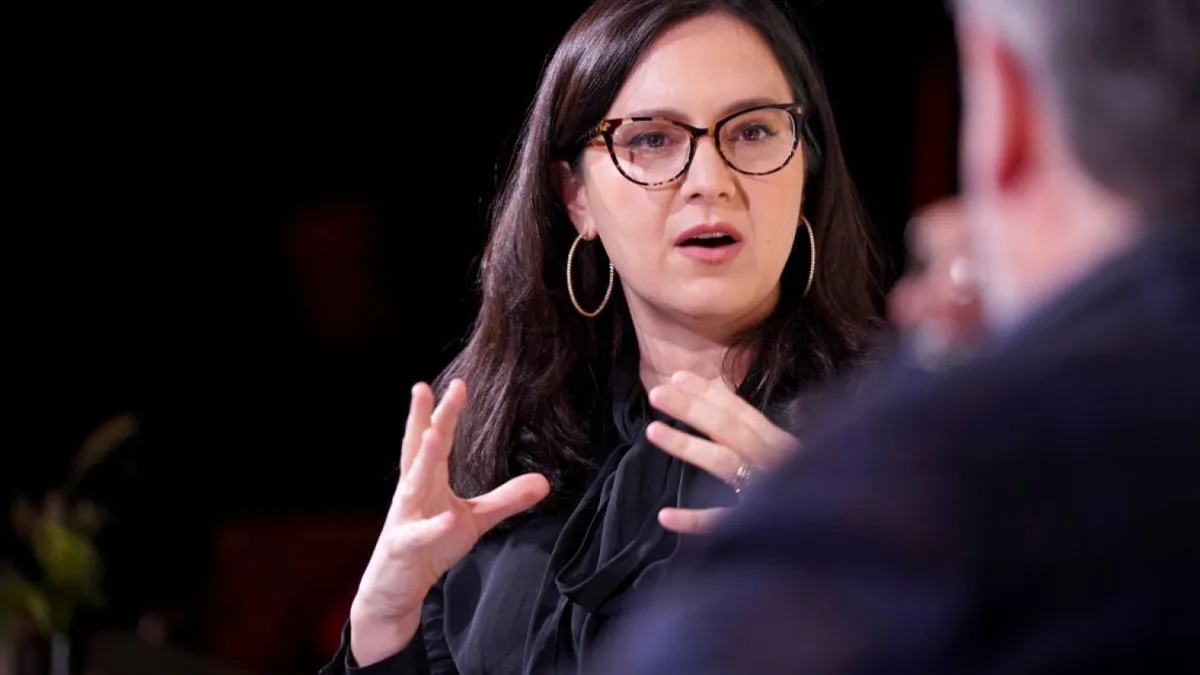
In a surprising turn of events, CBS News Editor-in-Chief Bari Weiss made the controversial decision to withdraw a highly anticipated investigative segment from the upcoming episode of 60 Minutes. This segment was set to focus on serious allegations of abuse at a detention center in El Salvador, where the Trump administration had sent hundreds of Venezuelan migrants last March. Just a day and a half before its scheduled broadcast, Weiss informed her colleagues that the piece could not be aired without an on-the-record comment from a Trump administration official, as reported by two insiders familiar with the situation.
The correspondent for the story, Sharyn Alfonsi, expressed her discontent with Weiss's decision in an email to her 60 Minutes colleagues. Alfonsi argued that the choice to pull the segment was not merely an editorial decision but a politically motivated one. Her email, which was later obtained by NPR and other media outlets, highlighted the potential implications of allowing government silence to dictate news coverage. "If the administration's refusal to participate becomes a valid reason to spike a story, we have effectively handed them a 'kill switch' for any reporting they find inconvenient," she wrote.
Prior to its cancellation, CBS News had actively promoted the segment, promising viewers an inside look at CECOT, one of the harshest prisons in El Salvador. A press release issued by CBS News emphasized the brutal conditions faced by deportees, which had been corroborated by multiple sources. Despite undergoing rigorous reviews from senior producers and legal teams, the segment was ultimately shelved. Alfonsi and her team had diligently sought comments from the Department of Homeland Security, the White House, and the State Department to ensure a fair representation of the story.
Following the decision, a CBS spokesperson noted that the programming announcement had been revised to indicate that the story would air at a later date. This move comes in the wake of a tumultuous year for CBS, during which former President Donald Trump sued the network over edits made to his interview on 60 Minutes. The lawsuit culminated in a settlement of $16 million, despite legal experts believing Trump had little chance of winning in court. This settlement played a role in smoothing the sale of CBS's parent company, Paramount Global, to the Ellison family, headed by David Ellison.
Since joining CBS News in October, Weiss has faced scrutiny regarding her editorial choices. She previously founded The Free Press, a publication critiquing mainstream media for perceived liberal bias. Weiss has voiced her belief that news organizations can regain public trust by fostering open debates between the center-right and center-left, rather than indulging in polarized narratives. However, critics argue that her leadership may be influenced by the political leanings of David Ellison's father, Oracle founder Larry Ellison, a known supporter of Trump.
The fallout from this incident raises questions about the future of 60 Minutes and CBS News as a whole. As they navigate the complexities of federal approvals for mergers and acquisitions, including potential ties with CNN, the network's editorial direction will be closely monitored. Weiss's decision to withdraw the segment has already drawn criticism, with Trump taking to Truth Social to express his discontent with the network's current ownership, stating that 60 Minutes has "actually gotten worse."
As CBS News continues to redefine its identity under new leadership, the implications of this decision will likely resonate within the industry and among viewers who expect rigorous journalistic standards. With promises to balance conservative and liberal perspectives, the network faces a challenging road ahead in regaining public confidence in its reporting.