

A recent video released by the Department of Homeland Security has drawn significant attention, depicting a dramatic helicopter operation where heavily armed Border Patrol agents rappel to the ground to execute a raid. The video, which appears cinematic in nature, is accompanied by the caption of a Bible verse, “Blessed are the peacemakers, for they shall be called sons of God.” This striking juxtaposition of visuals and messaging highlights the aggressive immigration policies that have become a hallmark of the Trump administration.
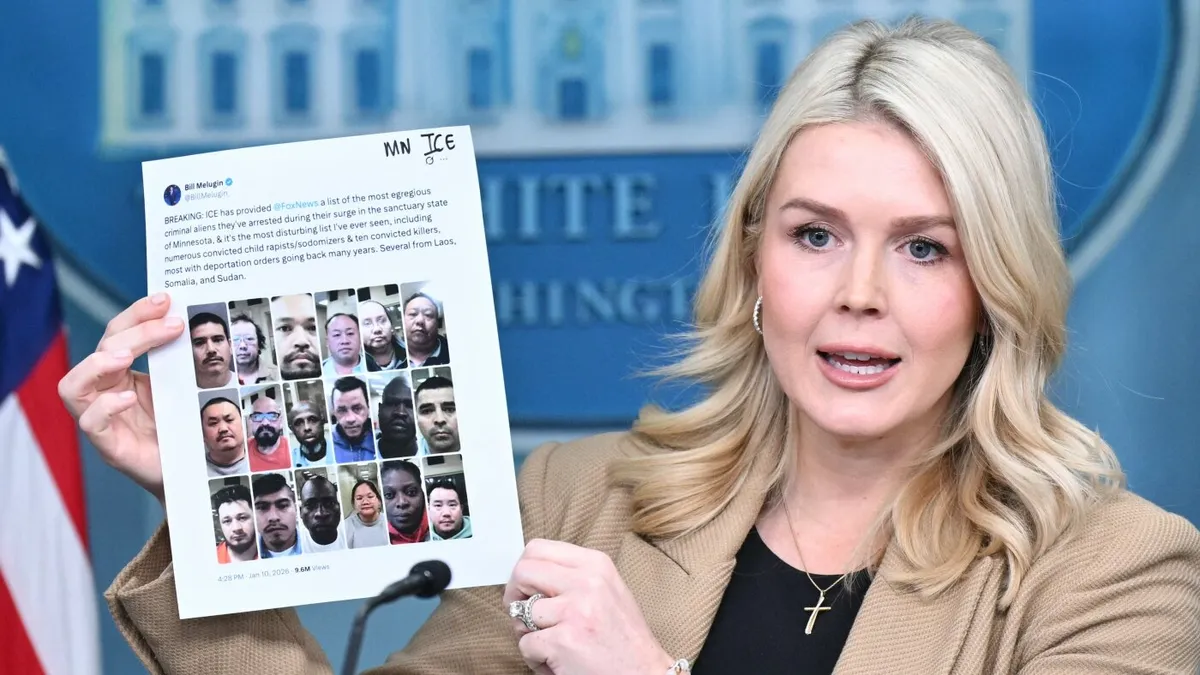
As President Trump embarks on his second term, the administration’s approach to governance increasingly intertwines with content creation. Videos like the one from DHS serve as tools to justify the administration’s immigration stance. This strategy has recently been brought to the forefront in Minnesota, where a surge of Border Patrol agents and the tragic shooting of 37-year-old Renee Macklin Good by an ICE agent have put the White House’s online narrative in stark relief against real-world actions.
Following another shooting incident involving ICE agents in Minneapolis, videos surfaced showing federal agents employing flash-bang grenades and pepper balls against protestors. Pro-Trump influencers quickly seized these clips, urging the president to invoke the Insurrection Act and deploy military forces. By the following morning, Trump had publicly threatened such actions unless Minnesota's politicians curbed what he termed “professional agitators.”
It is not solely within Minnesota that the Trump administration employs social media as a means to reach targeted audiences. Earlier in 2026, a military raid targeting Venezuelan President Nicolás Maduro was accompanied by a surge of viral imagery and updates, showcasing the administration's adeptness at leveraging social media platforms for political gain. The official White House X account has utilized popular meme formats to assert U.S. intentions regarding international affairs, such as the potential takeover of Greenland.
Yini Zhang, a political communications professor at the University at Buffalo, notes, “Volume is a feature,” emphasizing how the administration is able to shape narratives and agendas in real time. The posts often aim to provoke reactions and cast Democrats, immigrants, and the media as threats, framing a narrative of a battle between “real Americans” and a perceived liberal adversary.
The Trump administration's aggressive immigration enforcement in Minnesota, labeled as the largest DHS operation in history, was influenced by viral content from allies, including a video by YouTuber Nick Shirley. Shirley accused Somali-run daycare centers of fraud, leading to significant media attention and governmental scrutiny. However, state investigators found that the daycare centers were operating normally, highlighting the unsubstantiated claims that fueled the administration’s crackdown.
The White House has since praised Shirley’s videos, asserting they shed light on situations in Minnesota, while simultaneously threatening to withhold federal funding from Democratic-led states. This tactic has raised eyebrows, with critics arguing that it represents a governance style driven more by narrative than by rational policy-making.
The fatal shooting of Renee Macklin Good by ICE agent Jonathan Ross has ignited widespread debate. Video evidence shows Good was attempting to evade agents when she was shot, leading to contrasting interpretations of the incident. Trump’s immediate response characterized Good’s actions as violent, while others have called for a more nuanced understanding of the events leading up to the shooting.
Governor Tim Walz of Minnesota has criticized the administration for escalating tensions, asserting that their governance style fosters fear and conflict rather than constructive dialogue. “It’s governing by reality TV,” Walz stated, reflecting on the consequences of a media-driven approach that prioritizes sensationalism over substantive discussion.
As the Trump administration continues to navigate the complexities of governance through social media, the implications of this strategy are becoming increasingly significant. The shift from policy-driven to narrative-driven politics has created an environment where partisan divides often overshadow factual discourse. Political strategist Larry Schack notes that voters have largely abandoned issue-based assessments in favor of broad narratives that align with their political affiliations.
This phenomenon poses a challenge to democracy, as the proliferation of divisive messaging makes it difficult for citizens to engage in constructive dialogue. The events in Minnesota, combined with the administration's reliance on social media to control narratives, exemplify the profound impact of digital content on public perception and political reality.
The Trump administration's strategy of leveraging social media for political gain has transformed the landscape of governance. With influencers and partisan journalists now seen as primary audiences, the administration’s approach blurs the lines between policy-making and content creation. As tensions rise and public opinion shifts, the challenge remains: how will governance evolve in an era defined by digital engagement and social media narratives?